ServicesTPO Roofing
TPO Roofing in Carmel
Shingles need slope to shed water. Porch roofs, garage tops, additions and flat sections don't have it. We install TPO membrane with heat-welded seams and insulation built to drain, and one person handles your job from the first look to the final sweep.
What TPO Is and When It Fits Your Home
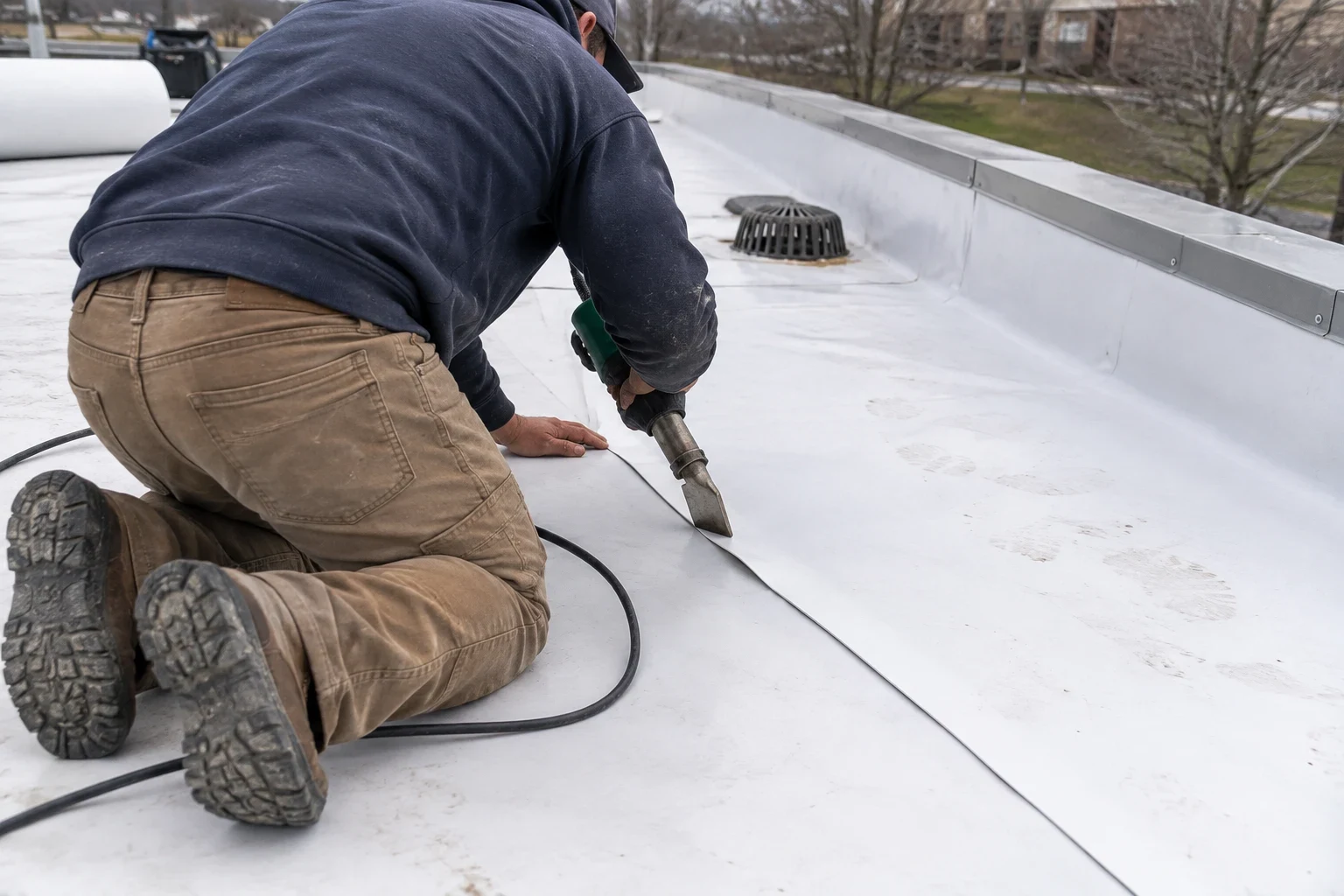
TPO, short for thermoplastic polyolefin, is a single-ply membrane installed in wide rolls. Instead of glue or tape, the seams are melted together with a hot-air welder. Once fused, the joint is a solid piece of plastic, so it stays watertight on sections where rain drains slowly and puddles for a while after a storm.
It belongs on roof areas pitched below roughly 2 in 12. Asphalt shingles leak at that slope because water gets pushed back up beneath the tabs. Rolled roofing and modified bitumen on those same spots usually crack and blister after a number of Indiana freeze-thaw winters. When the rest of your home has shingles, we flash the TPO into the shingle roof so the joint between them stays dry.
A single person from our company inspects the roof with you, prepares the estimate and oversees the install. If a question comes up midway through the job, that same person is the one you call.
What Goes Into Our TPO Installation
- 01
Removal down to the deck
The old membrane, rolled roofing or gravel comes off until we reach bare sheathing. Soft or delaminated boards are swapped out before any new material is laid.
- 02
Polyiso and tapered board
A layer of polyiso insulation goes down over the deck. On a dead-flat roof we add tapered pieces that build in a gentle pitch toward the edge, scupper or drain, so water no longer collects in the center.
- 03
Attaching the membrane
We either screw the sheet through plates into the deck or bond it down fully with adhesive. Which one we use depends on the deck material, the size of the roof and its wind exposure.
- 04
Welded seams, probed end to end
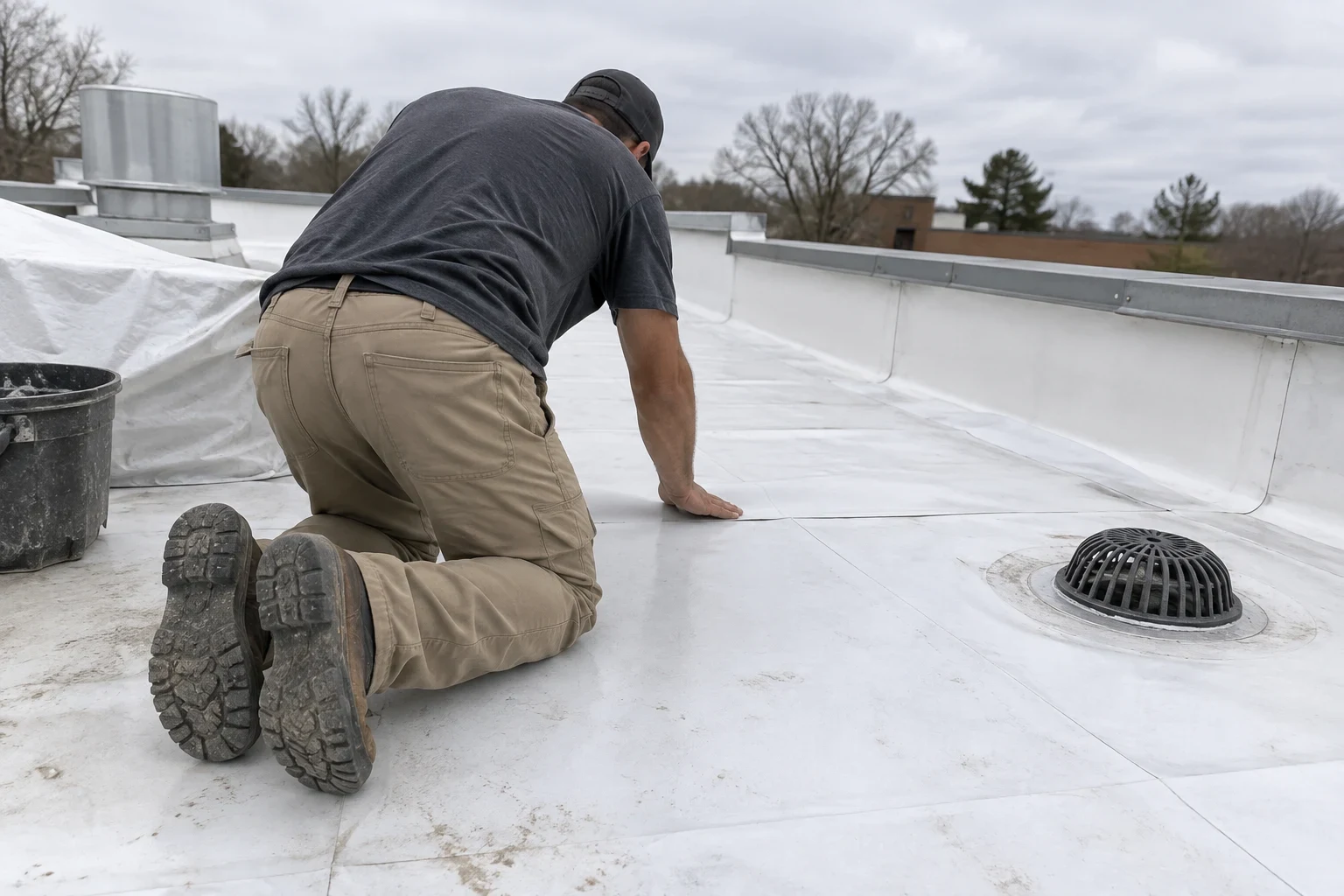
Each seam is fused with a hot-air welder and then run along its whole length with a seam probe. Cold welds cause more TPO leaks than anything else, so we find and fix them before packing up.
- 05
Flashing, edges and penetrations
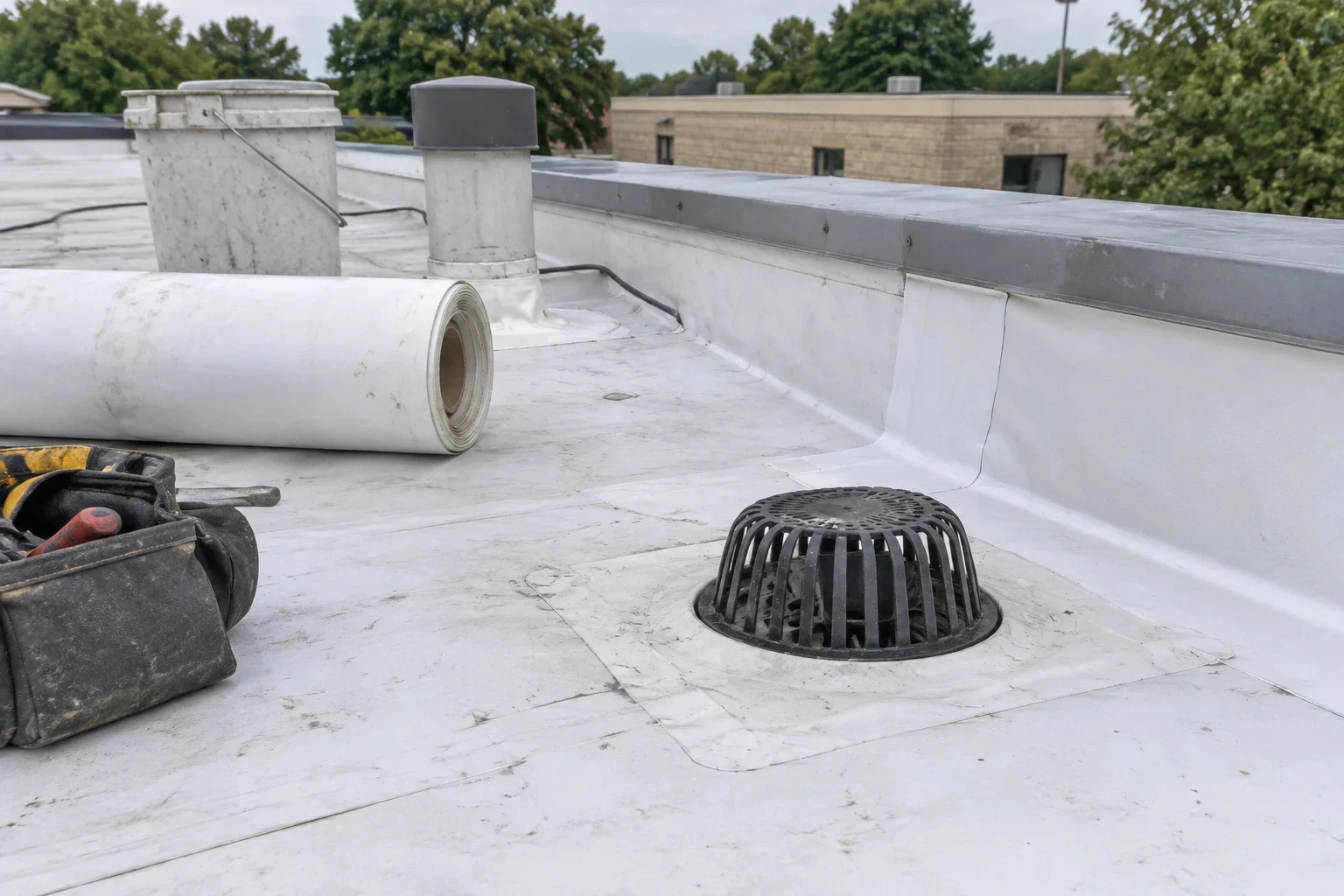
Membrane at the walls is turned up and held with termination bar. Pipes and vents get prefabricated boots, and drip edge or edge metal closes off the perimeter so wind can't lift the sheet.
- 06
Cleanup
Debris is bagged and hauled, a magnet sweeps the yard and driveway for loose fasteners, and we walk the finished roof together.
Questions about TPO Roofing?
Call(317) 434-8073Signs Your Flat or Low-Slope Roof Needs TPO
Water standing two days after rain
Ponding that lingers past 48 hours means the roof has sagged or never drained properly. In winter that water freezes and expands at seams and edges.
Blisters, cracks or alligatoring
Rolled roofing and modified bitumen dry out under UV and crack into an alligator-skin pattern. Blisters mean trapped moisture is already lifting the layers apart.
Stains on the ceiling below
A brown ring on the ceiling under a porch roof or addition usually means water has been getting in for a while. Wet insulation spreads it well past the actual hole.
Soft spots underfoot
If the roof feels spongy when you step on it, the insulation or deck underneath is saturated. Patching the surface won't dry it out.
Shingles installed on too little slope
Shingles on a nearly flat section often look fine from the ground but leak at every thaw. TPO is the correct material for that pitch.
How a TPO Job Runs
- 1
Free inspection
We measure the area, confirm the pitch, check drains and wall transitions, and test the insulation for moisture. Afterward we hand you photos of the conditions we found plus a written, line-item estimate.
- 2
Scheduling and permit
Your contact picks a date with a dry forecast and pulls the permit when the city calls for one. Membrane, insulation and edge metal are ordered ahead of time so install day doesn't wait on a delivery.
- 3
Install day
On most residential sections we tear off, insulate and cover the roof in one day, so it is never open overnight. Bigger or more detailed roofs can run into a second day.
- 4
Seam check and walkthrough
We probe every weld, clean up the property and walk the roof with you. If anything needs attention later, you reach the same person who ran your job.
What Drives the Price of a TPO Roof
Two things set most of the price: the condition of what sits under the membrane and how much detail work the roof needs. Per square, a broad open garage roof usually comes in lower than a small porch boxed in by three walls with a skylight in the middle. Each of these items gets its own line on your written estimate, so nothing is buried in a single total. If paying all at once doesn't suit you, we offer financing.
- Square footage and penetrations
- The area of the roof decides how much membrane and insulation we order. Each vent, pipe or skylight adds its own flashing work.
- Removal and deck repair
- Stripping two or three old layers takes more labor than one. Any rotted sheathing gets replaced before the new insulation goes on.
- Insulation thickness and taper
- Thicker polyiso and custom-cut tapered board raise the material cost. They also correct ponding and add R-value over a heated room below.
- Membrane gauge and attachment method
- 45-mil membrane is the lightest option, 60-mil costs more and 80-mil more still. A fully adhered system takes more bonding adhesive and labor than a mechanically fastened one.
- Tie-ins and access
- Joining TPO to a shingle roof, an exterior wall or a second-story wall takes extra flashing. A roof that is hard to reach adds setup time.
TPO Roofing Questions
Will a white TPO roof look out of place on my house?
Most flat and low-slope sections aren't visible from the street, so color is rarely an issue. White is the usual pick because it bounces summer sun away from the room underneath. Gray and tan membranes are available if you can see the roof from an upstairs window.
Can TPO be installed over my existing flat roof?
In some cases, yes: when there is just one existing layer and the insulation below it is dry. We test for moisture during the inspection. Sealing new membrane over wet insulation locks the water in and cuts the new roof's life short, so if we find moisture we recommend tearing off.
How does TPO hold up to snow and ice?
A welded seam stays closed under standing meltwater, where lapped or glued seams can start to separate. Drainage is the bigger issue in winter. Tapered insulation and open scuppers keep ice from collecting at the low points and along the edge.
Is it OK to step on a TPO roof?
Occasional foot traffic is fine, such as clearing leaves from a drain or scupper. If someone will cross the roof often to service an HVAC unit or reach a deck door, we can install walkway pads along that path so the membrane isn't worn down.
Should I choose TPO or EPDM for a porch or addition?
Both are single-ply membranes. EPDM is a rubber sheet joined with tape or glue, while TPO seams are fused with heat, and we favor that on residential roofs where water lingers. At the inspection we'll go over how each would perform on your particular roof.
Get Your Low-Slope Roof Looked At
We'll check the pitch, the drainage and what's under the surface, then give you a written estimate. One person stays with your job from that first visit through cleanup.