ServicesRoof Repair
Roof Repair in Carmel, IN
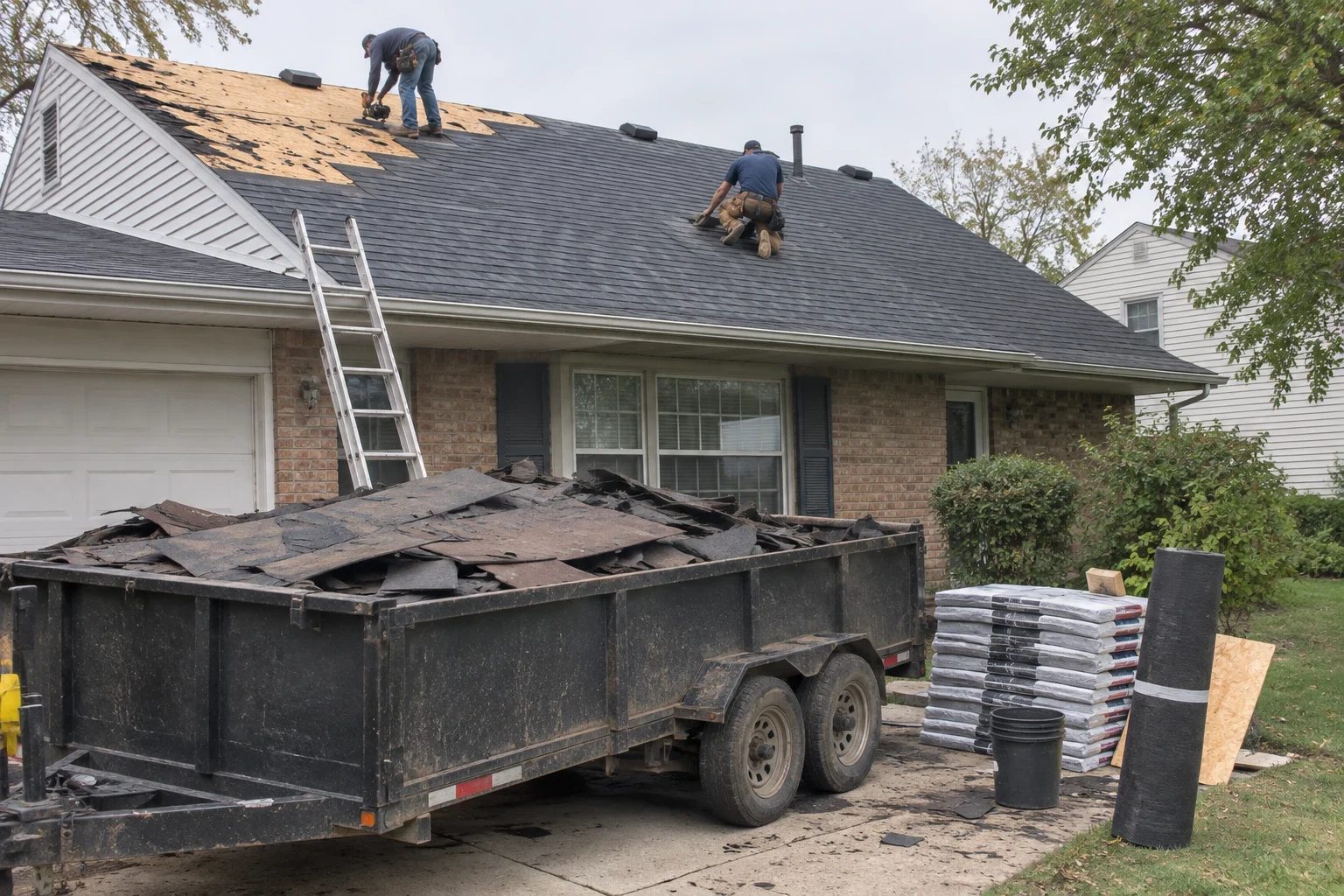
A leak almost always traces back to one component: a split boot around a vent pipe, a shingle whose seal let go, or step flashing that opened up. We locate that component, photograph it for you, and rebuild it with each layer lapped correctly so your home sheds water again.
When a repair is the right call
A roof with solid decking and shingles that still hold their granules rarely needs to come off because of one leak. Water usually gets in at a transition, where the shingle field meets a chimney, sidewall, vent or valley. Those spots can be opened up and rebuilt without touching the rest of the roof.
We tell you plainly when repair stops making sense: widespread curling, shingles that crack when lifted, or soft decking in several places. Then we explain why and talk through roof replacement as the other option. One person handles your job from the first call through cleanup, so the person who looked at your roof is the one answering your questions.
Freeze-thaw winters are hard on sealant, so we favor mechanical fixes such as new metal flashing and properly lapped shingles over caulk that tends to crack by spring.
What our roof repair work covers
- 01
Vent pipe boots
Sunlight bakes the rubber gasket on a plumbing vent until it cracks, and rain follows the pipe straight into the attic. We install a complete new boot with its base slid under the course above, rather than coating the split with sealant.
- 02
Step flashing and chimney counterflashing
Wall flashing works loose over time, and chimney counterflashing backs out of the mortar. We lift the nearby shingles, set fresh step flashing one piece per course, and seat new counterflashing in a newly cut reglet.
- 03
Wind-torn shingles
After the adhesive strip releases, gusts fold and rip the tabs. We remove only the damaged shingles, fasten new ones on the manufacturer's nailing line, and get as close as current stock allows on color and profile.
- 04
Valley and eave leaks
Valleys handle the heaviest runoff on the roof, and eaves are where ice backs water up. If the underlayment there has broken down, we put down ice and water shield before the shingles go back on.
- 05
Sheathing and popped nails
Plywood or OSB that has gone soft from a slow leak gets cut out and replaced with new panels. Nails working up out of the deck lift the shingles over them, so we remove them, refasten into sound wood and seal the old holes.
Questions about Roof Repair?
Call(317) 434-8073Signs your roof needs repair
Water spots on a ceiling
A yellow-brown stain on the drywall tells you water has been getting in for some time. On the roof, the actual opening often sits a few feet upslope of the stain, so we look in the attic as well.
Missing or folded shingles
Shingle pieces on the lawn after a storm, or tabs with a crease across them, mean the bond has failed. The exposed nail holes underneath will let water in during the next long rain.
Damp sheathing or rusted nails in the attic
Dark patches on the underside of the roof deck, or rust and frost on the nail points during winter, signal either a leak or moisture that the attic ventilation is not moving out.
Heavy ice along the eaves
A built-up band of ice at the gutter edge traps meltwater above it, and that water works its way under the shingles. Ice dams that come back year after year usually call for eave or underlayment work.
Flashing pulling away
You can often spot flashing separating from a chimney or wall without a ladder. That gap lets wind-driven rain run behind the roofing and into the framing.
How a repair job runs
- 1
Your free inspection
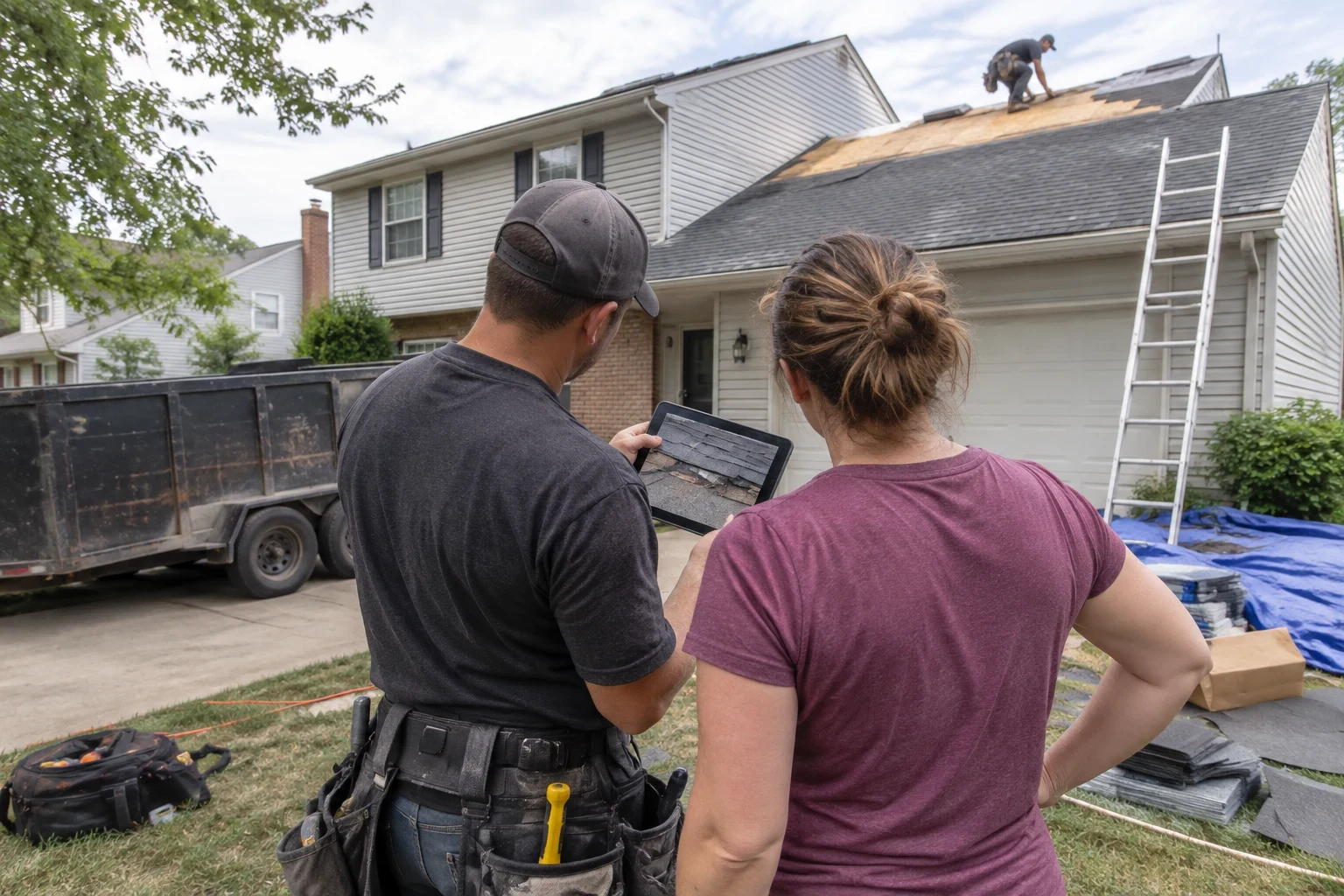
When you call, the person on the line schedules your free roof inspection and remains your contact until the job is closed out. We look over the shingles, flashing, vents and pipe boots, plus the underside of the deck from the attic where it is reachable.
- 2
Photos and a written estimate
You see pictures of the component that failed and the roofing around it. Then you get an estimate on paper with each item priced separately. If a new roof is the better value, we tell you and lay out why.
- 3
Repair day
Tarps go down over landscaping and the work area first. The crew pulls only the shingles needed to reach the problem and rebuilds starting at the lowest layer, so every piece overlaps the one beneath it. Most repairs wrap up in one visit.
- 4
Cleanup and follow-up
We run a magnetic sweeper across the yard and driveway, pull debris out of the gutters and send you photos of the finished repair. The same contact follows up later to confirm the leak is gone.
What sets the price of a roof repair
Two things drive a repair price: which component gave out and how much roofing has to come off to get at it. We write the estimate after the inspection, broken out by line, so you know what each piece of work costs before we start. Financing is available if you want to pay over time.
- Damage under the surface
- Catch a leak early and the fix may be a single new boot. Let it run through a season and the plywood underneath can soften, which adds sheathing and the labor to swap it.
- Slope and roof height
- A steep pitch or a second-story eave calls for roof jacks, fall protection and extra setup. A low roof you can walk on goes faster.
- Location of the leak
- An open-field shingle is a quick swap. At a chimney, valley or sidewall, more courses have to be lifted and more flashing rebuilt.
- Materials and color match
- A discontinued shingle color, flashing bent to fit on site, or mortar work at the chimney each shifts the materials portion of the estimate.
Roof repair questions
Can you match my existing shingles?
Close, in most cases. We pick the same brand, profile and color from what manufacturers still stock. Shingles that have been out in the weather for years will read a shade different from new ones at first, and that gap narrows as the new granules weather.
Is repairing an older roof worth it?
It is when the leak is confined to one spot and the surrounding shingles still bend without cracking and keep their granules. When the shingles snap or water is coming in at several places, a repair only delays the inevitable, and we will say so at the inspection.
Will insurance pay for my roof repair?
Policies typically pay for sudden events like hail or wind, not for wear from age. On storm claims we work alongside you and your insurance company, photographing and documenting what we find, while the adjuster makes the coverage call. Our Storm Damage Repair page walks through those steps.
Why not just seal the leak with caulk?
Caulk splits as the roof expands and contracts, and Indiana freeze-thaw cycles make that happen sooner. It also covers up whatever caused the leak. Swapping out the failed boot or flashing corrects the path the water was taking.
Can you repair a roof in winter?
Yes, as long as the surface is dry. The adhesive strip on a new shingle only activates in warm sun, so on cold-weather jobs we put dabs of roofing cement under every new tab by hand. That holds the tabs flat against wind until spring warmth bonds the factory strip.
Do I need to be home during the repair?
Usually not. Everything happens outside, and we only go into the attic if you want the leak confirmed from below. Your contact lets you know when the crew is on the way and sends photos once the work is finished.
Get the leak found and fixed
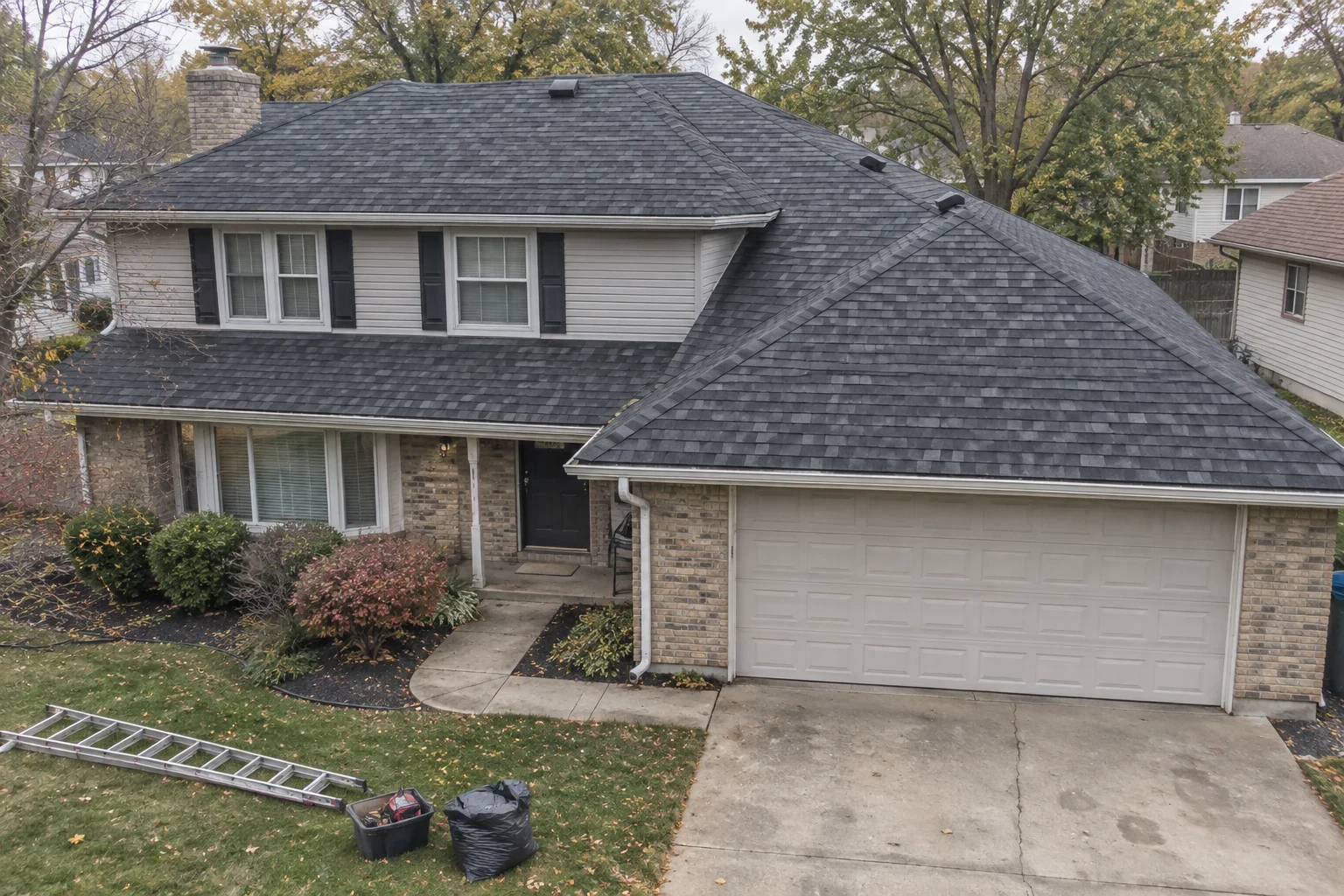
One person will set up your free roof inspection, look at the roof and the attic, and explain what failed in plain terms. We work in Carmel and nearby towns including Westfield, Fishers and Zionsville.