ServicesRoof Replacement
Roof Replacement in Carmel
When repairs stop holding, we tear your roof down to the deck and rebuild it properly: sound sheathing, ice and water shield, new flashing and balanced ventilation. One person handles your questions, the schedule and the final walkthrough.
When a new roof is the right answer
A roof replacement makes sense when the shingles have worn through their protective granules, the underlayment beneath them has dried out, or leaks keep showing up in new places. Patching one spot on a roof like that only moves the problem a few feet over. We will tell you plainly if a roof repair still makes more sense, and show you photos of what we found either way.
Central Indiana winters are hard on a roof. Snow melts on a warm deck, refreezes at the cold eaves and backs water under the shingles. A replacement is the chance to fix that at the source with ice and water shield along the eaves and valleys and an attic that vents the way it should.
From the first inspection to the last nail sweep, you deal with one person. That person writes your estimate, schedules the crew, answers the phone when you have a question and walks the finished roof with you.
What your roof replacement includes
Stripped down to bare sheathing
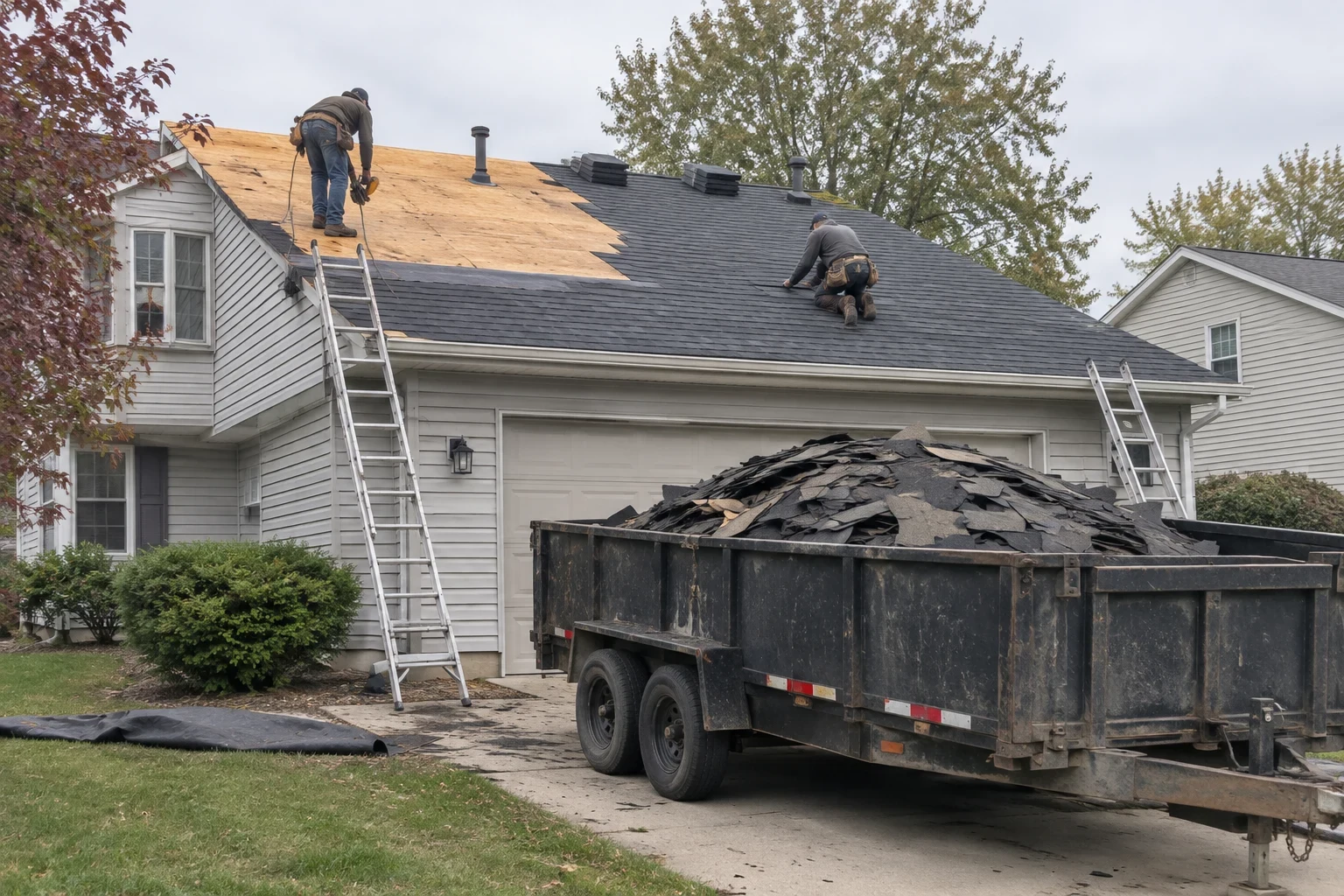
The crew pulls off all the old shingles, felt paper and fasteners until only the wood deck remains. Laying new shingles over an old layer adds weight and covers up deck problems, so we never start from anything but clean sheathing.
Deck inspection and repair
With the deck exposed, we check every sheet for soft spots, rot and delamination. Damaged OSB or plywood is cut out and replaced before anything goes on top, and we photograph it so you see what was underneath.
Ice and water shield plus synthetic underlayment
A self-adhering membrane goes along the eaves and in the valleys where ice dams and runoff concentrate. The rest of the deck gets synthetic underlayment, which resists tearing and moisture better than old felt paper.
New flashing and drip edge
Step flashing at walls, pipe boots, chimney flashing and drip edge are replaced, not reused. Most leaks on an older roof start at these joints, not in the open field of shingles.
Ventilation sized to your attic
Fresh air needs to enter low through the soffit vents and leave high through a ridge vent, in roughly equal amounts. When that airflow is right, the attic stays cooler in summer and drier in winter, so shingles age slower and ice dams form less often.
Cleanup and magnet sweep
Tarps protect your landscaping during tear-off, and we run magnetic sweepers across the lawn, beds and driveway before the crew leaves.
Signs your roof is ready to be replaced
Granules in the gutters
Dark grit collecting in your gutters or at the downspouts means the shingles are losing the layer that shields the asphalt from UV. Bare asphalt cracks and wears out quickly after that.
Curling, cupping or cracked shingles
Shingles whose edges lift or whose centers sink have lost their flexibility. Wind gets under them, and a loose tab is the start of a leak.
Repeat leaks in different spots
One leak is a repair. Several leaks over a year or two usually point to underlayment and flashing that have failed across the whole roof.
Stains or daylight in the attic
Water marks on the rafters, damp insulation or pinpoints of light through the boards mean water and air are getting past the roof system.
A sagging roofline
A dip between rafters often means the decking has absorbed water for a long time. That sheathing has to be replaced, and that is only possible with the old roof off.
How the job runs, start to finish
- 1
Free inspection with pictures
We climb the roof and, when there is a way in, check the attic as well. Then we sit down with you and go through pictures of the shingles, flashing, vents and any decking that feels soft underfoot.
- 2
Written estimate and material choice
Your contact explains each line of the estimate and the shingle or metal options that fit your home. If you are weighing materials, our Shingle Roofing and Metal Roofing pages go into the differences.
- 3
Permits, materials and a start date
If your town requires a building permit for a reroof, we file for it, then get materials delivered and agree on a day that works for you. When rain shows up in the forecast, your contact phones you with a new date instead of risking an open deck.
- 4
Tear-off and installation
Most homes are torn off, dried in and reshingled in one to two days. The deck is never left exposed overnight without underlayment.
- 5
Cleanup and final walkthrough
After the magnet sweep, the same person who wrote your estimate walks the finished roof with you and answers anything left on your list.
What moves the price of a new roof
Your price comes from measured squares and the conditions we actually find on the inspection, not from a guess based on the footprint of your home. Every piece of the work, from tear-off and disposal to flashing and vents, gets its own entry on the written estimate, so nothing appears later that you did not see first. Financing is available if spreading the cost over time suits your budget better.
- Roof size and pitch
- Roofers measure in squares, and one square covers 100 square feet. A steep pitch calls for roof jacks, harnesses and slower footwork, and that extra time shows up as labor.
- Layers and deck condition
- Stripping two old layers means more labor and a heavier dumpster load than stripping one. Rotted sheathing is priced by the sheet, and you see the photos of it before any of that work is added.
- Material you choose
- Architectural shingles, impact-rated shingles and standing seam metal differ in both material cost and the labor needed to install them.
- Complexity and penetrations
- Every valley, dormer, skylight and chimney needs flashing cut and fitted by hand. A plain gable roof runs less per square than one with several planes meeting at different angles.
Roof replacement questions
Something not covered here? (317) 434-8073
How long will the replacement take?
Most homes need one to two days of work on the roof. Large or steep roofs, or ones with a lot of deck repair, can run longer. Your contact gives you the expected timeline before the crew arrives.
Is it okay to shingle over the roof I already have?
It is not something we advise. A layover conceals soft or rotted decking, holds heat against the new shingles and puts extra weight on the framing. It also leaves the old flashing and underlayment in place, which are often where the leaks started. Stripping to the deck is the only way to rebuild every layer properly.
Will my insurance pay for a new roof?
If hail or wind caused the damage, it may. We work with homeowners and insurance companies on storm damage claims. In practice that means we photograph hail bruising, lifted tabs and dented vents, and we can be on the roof when the adjuster visits if you would like. Coverage is the adjuster's decision, and our Storm Damage Repair page walks through the steps in more detail.
Do I need to be home during the work?
No, as long as we can reach an exterior outlet and the driveway. Expect noise during tear-off, and take down anything loose hanging on interior walls. Your contact keeps you updated by phone through the day.
Do you offer financing?
Yes. Financing is available for roof replacement, and your contact can go over the options with you when we review the estimate.
Find out if your roof needs replacing
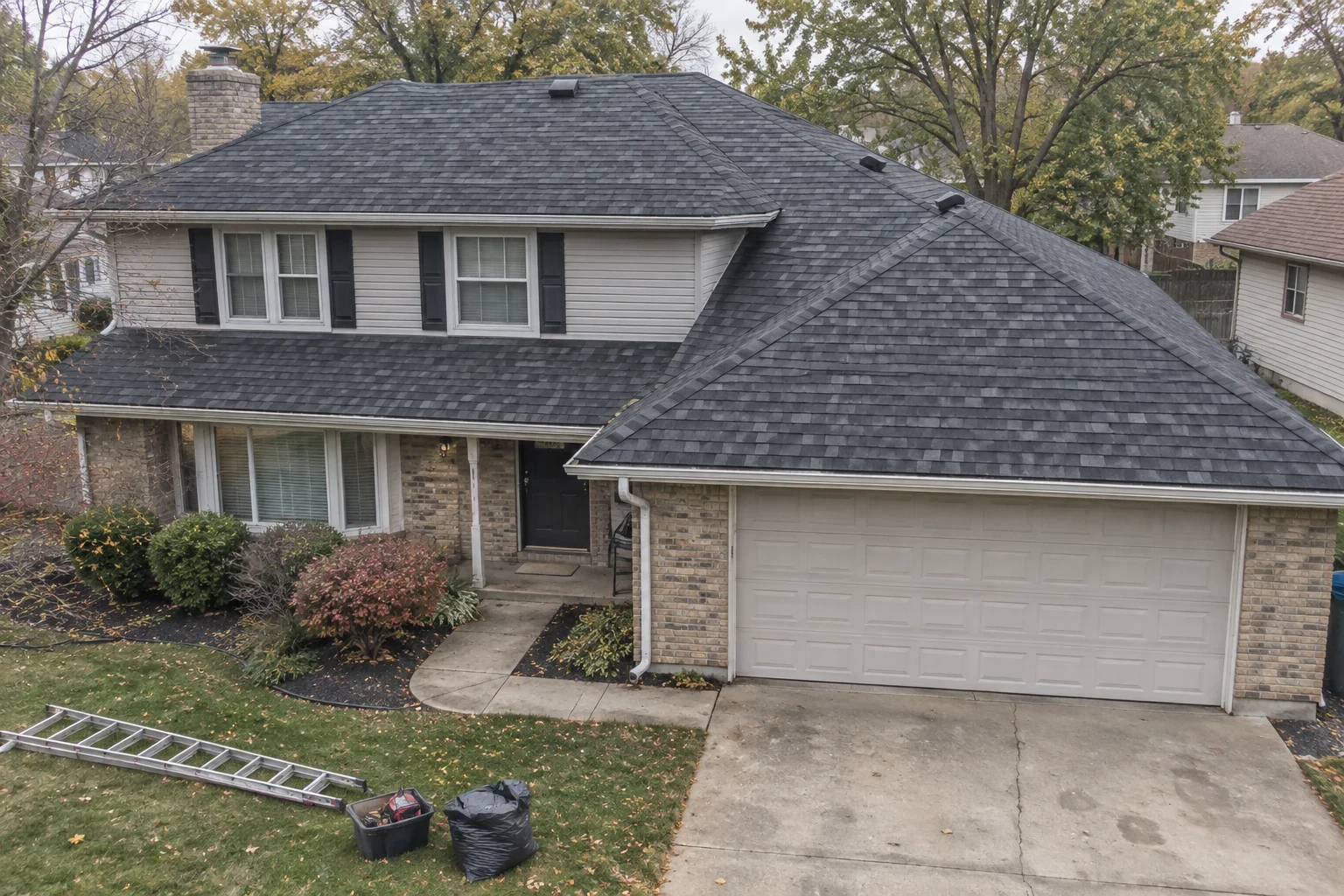
We look over the shingles, flashing and attic, show you a photo of every trouble spot, and give you a plain answer on whether a repair still has life in it or the roof is done. The person who meets you on that first visit stays with your project until the yard is swept.