ServicesMetal Roofing
Metal Roofing in Carmel
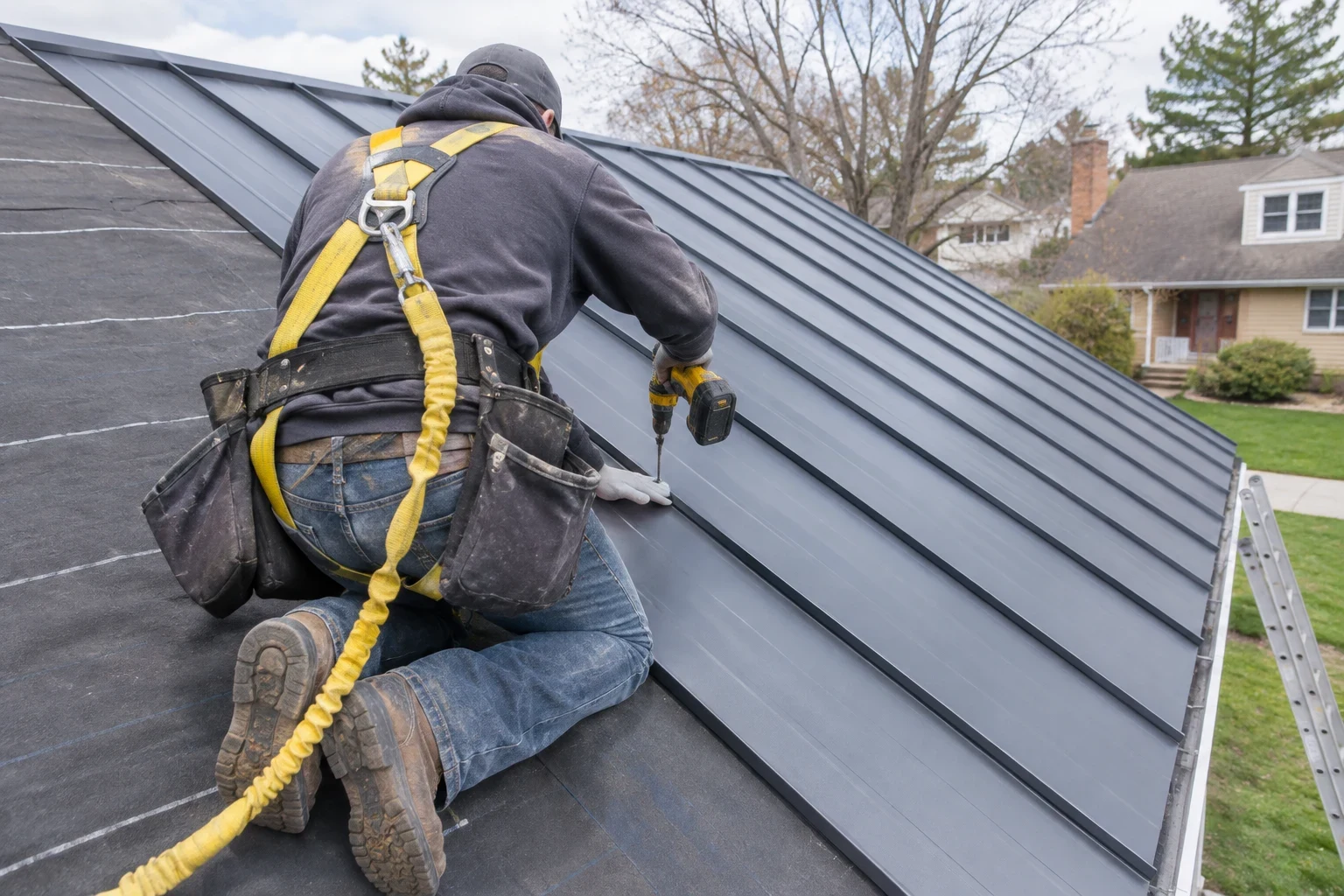
Our crews put standing seam and exposed-fastener steel roofs on houses in Carmel and the surrounding area. A single person on our side measures your roof, lays out the panel choices and answers your questions through installation and cleanup, so you never wonder who to ask.
When a Metal Roof Is the Right Call
A metal roof is a set of steel or aluminum panels locked or fastened over a solid deck, with underlayment beneath and formed trim at every edge. Done well, it sheds snow and rain fast, shrugs off wind uplift that peels shingles, and lasts far longer than an asphalt roof. Done poorly, it leaks at screws, buckles between seams and dumps snow onto your gutters.
Metal pays back its higher cost over long ownership, so it fits best if you expect to keep your home for many years. It is also worth a look when hail or ice dams keep sending you back for roof repair, or when part of the roof has a low pitch that shingles handle badly. If budget comes first and a move is likely soon, we will say so and explain why shingle roofing may serve you better.
From the first visit, one person handles your questions, the material order, the crew schedule and the final walkthrough. You do not repeat yourself to a new person at each stage.
What Our Metal Roofing Work Includes
Standing seam or exposed-fastener panels
Standing seam panels attach with hidden clips that let the steel expand and contract through summer heat and winter cold. Exposed-fastener panels cost less but rely on screws with rubber washers that need checking over time. We explain both so you choose knowing the tradeoff.
Deck check and repair
Metal needs a flat, solid deck. We replace soft or delaminated sheathing before any panel goes down, because a dip in the deck shows up as a wave in the metal.
Heat-rated underlayment and ice barrier
Steel in full sun gets hotter than asphalt, so the sheet beneath it is a synthetic underlayment rated for those temperatures. We add a self-adhering ice and water membrane at the eaves and through every valley, the two spots where winter meltwater tends to pool and creep back uphill.
Formed trim and flashing
Drip edge, rake trim, valley metal, ridge cap with vented closures, and flashing at chimneys, walls and pipes are matched to the panel color. Water on a metal roof usually gets in at these transitions rather than through the panels, so our installers form and fasten each piece with extra care.
Snow guards where they matter
Snow lets go from metal in sheets. We place snow guards above entries, walkways, decks and gutters so a thaw does not drop a load where people stand.
Cleanup and magnet sweep
Metal jobs leave screw and panel shavings. We haul off the old roof and sweep the yard and driveway with a rolling magnet before we leave.
Signs Metal Roofing Is Worth Considering
Your shingle roof is near the end
Curling tabs, bare spots where granules washed off, and granules piling in the gutters mean replacement is coming. That is the moment to compare metal against another round of shingles.
Repeat hail or wind claims
If storms keep lifting tabs or bruising shingles, a heavier-gauge metal panel holds up better against both.
Ice dams every winter
Ridges of ice at the eaves push water under shingles. Snow slides off a metal roof sooner, and the membrane beneath protects the eaves if water does back up.
Your existing metal roof leaks at the screws
On older exposed-fastener roofs, washers dry out and screws back out as panels move. We can reseal, re-screw or convert to standing seam depending on how widespread the problem is.
Rust at cut edges or seams
Surface rust on panel ends or around fasteners is fixable early. Left alone, it eats through the steel and the panel has to come off.
How a Metal Roof Job Runs
- 1
Free roof inspection and measurements
We check the deck from the attic, note pitch, valleys and every penetration, and photograph what we find. You get an honest read on whether metal suits your roof.
- 2
Written estimate with the details spelled out
The estimate names the panel profile, steel gauge, paint finish, underlayment and trim. Your contact walks you through each line by phone so nothing is vague.
- 3
Ordering and scheduling
Standing seam panels are often cut to the exact length of each roof run, so there is lead time. Your contact orders material, pulls any required permit and gives you a firm start date.
- 4
Tear-off and install
The crew removes the old roof, repairs the deck, lays underlayment and membrane, then sets trim and panels from the eave up. Flashing and ridge cap go on last.
- 5
Walkthrough and cleanup
Your contact checks seams, fasteners and flashing with you, then the crew finishes the magnet sweep and debris haul-off.
Why Metal Roof Quotes Vary
A metal roof carries a higher starting price than asphalt, and quotes for two similar houses can land far apart. The panel system you choose and the shape of your roof account for most of that spread. Financing is available if paying over time works better for you.
- Panel system and steel thickness
- Concealed-clip standing seam takes more steel and more labor hours than through-fastened panels. Stepping up from 26-gauge to heavier 24-gauge steel adds material cost, but the thicker panel keeps its shape better under hail.
- Paint finish
- PVDF coatings keep their color and resist chalking longer than standard polyester paints, and they cost more for that reason.
- Roof shape
- Each valley, dormer, skylight and pipe calls for custom-cut panels and flashing formed by hand. A plain gable roof goes up much faster than one with many intersecting planes.
- Tear-off and deck condition
- How many layers of shingles have to come off, and how much rotted sheathing turns up underneath, both shift the labor and material on your estimate.
- Snow guards and accessories
- Snow guards, vented ridge closures and extra trim pieces raise the total, but they head off the complaints metal roof owners raise most often.
Metal Roofing Questions
Something not covered here? (317) 434-8073
Is a metal roof loud in the rain?
Not when it is installed over a solid deck with underlayment and an insulated attic below. The loud metal roofs people remember are usually on barns with open framing. Most homeowners hear little difference from shingles.
Will hail dent it?
Large hail can leave cosmetic dents, especially on thinner panels. Heavier gauge steel and textured or ribbed profiles hide and resist dents better. A dent rarely affects whether the roof keeps water out.
Can you put metal over my existing shingles?
Sometimes, but we usually recommend tear-off. Going over shingles hides deck rot and can leave an uneven surface that shows through the panels. We explain what we found and why we suggest one approach.
Are metal roofs more likely to be hit by lightning?
They are not. Lightning seeks the highest point around it, and the roofing material has nothing to do with where it lands. In the rare case a strike does reach the roof, steel panels will not burn, and they carry the energy across a wide surface instead of concentrating it.
Will my gutters survive snow sliding off?
Without snow guards, a sheet of sliding snow can bend or pull gutters loose. We place guards to hold snow until it melts gradually, and our gutters service can reinforce hangers if needed.
Find Out If Metal Fits Your Roof
We will look at your deck, pitch and existing roof, then tell you plainly whether metal or shingles makes more sense. One person handles your job from that first visit on.