ServicesStorm Damage Repair
Storm Damage Repair in Carmel
Hail bruises shingles and wind breaks their seal strips, often without leaving a leak you can see yet. We inspect the whole roof, photograph what the storm did and repair it. One person handles your questions from the first visit through cleanup.
What storm damage repair covers
Storm damage repair restores the roof components a hailstorm, high wind or a dropped branch has weakened. On asphalt shingles the most common injury is a bruise, where the impact cracks the fiberglass mat beneath the granule layer. Wind adds its own list: tabs whose adhesive strip let go, shingles creased or torn off, flashing pulled loose, and dented vents and gutters. Some marks are only cosmetic. Many are not, because bare asphalt degrades under UV and a tab that has lost its seal keeps lifting in every gust that follows.
A repair makes sense when the damage sits on a few slopes or a handful of parts and the rest of the roof still has years left. If hail struck every plane, or the shingles were close to worn out before the storm, we will recommend roof replacement instead and show you the photos behind that call.
Most of the hail we see arrives with central Indiana's spring and early summer thunderstorms. Once you call, one person at our company is your contact the whole way. They do the inspection, walk you through the findings, meet the adjuster if you file, and schedule the crew, so you never have to explain the situation twice.
What the work includes
Every slope inspected and photographed
We chalk-circle hail strikes inside test squares on each slope and photograph them. We also shoot the soft metals, which show strike size and direction clearly. The photos are yours to keep, not just a summary we tell you about.
Tarping open areas
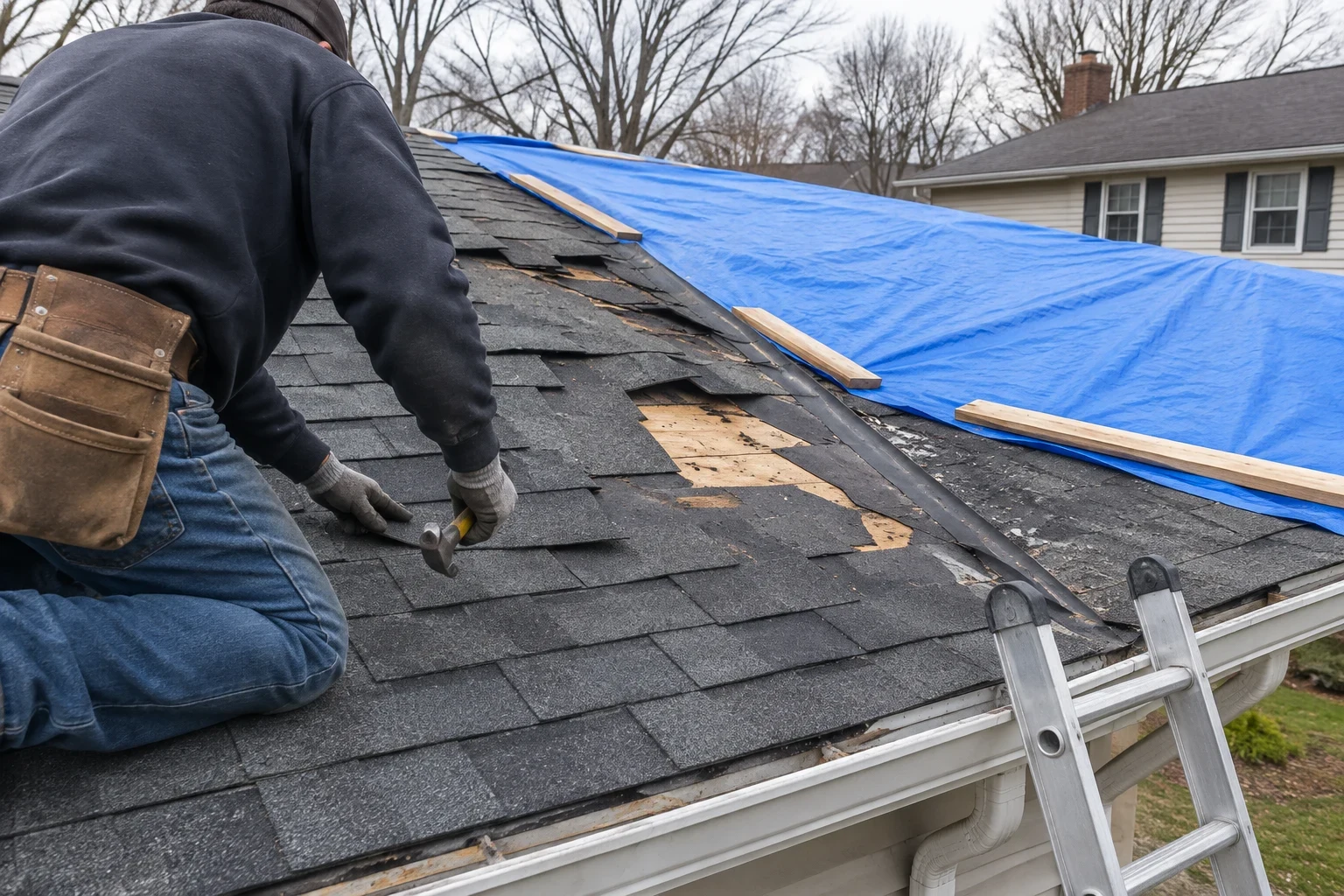
When a falling limb or strong wind has exposed the roof deck, we fasten a tarp over the opening so rain stays out until the permanent fix goes in.
Replacing and resealing shingles
Cracked, creased and missing shingles come off and new ones go on, fastened within the manufacturer's nailing line so they hold in the next blow. Tabs that lifted but are still intact get hand-sealed with roofing adhesive so they lie flat again.
Pipe boots, vents and flashing
Hailstones tear the rubber collars around plumbing stacks and leave dents in box and ridge vents. Wind can pry step flashing away from sidewalls. We replace these components because most leaks after a storm begin at them.
Gutter and downspout repair
A dented or sagging gutter drains slowly and can back water up behind the fascia board. We fix or replace the affected runs during the same job. See our Gutters page for more on that work.
A written scope for your claim
If you file with your insurer, we hand you a written scope backed by the photos, so the claim reflects exactly what is on your roof.
How to tell a storm hurt your roof
Grit collecting below downspouts
After a storm, look for a thick layer of dark granules where the downspouts empty. That grit came off your shingles when hail struck them.
Fresh dents in metal
Check gutters, downspouts, vent caps and the fins on the air conditioner. Round, new dents tell you hailstones were large enough to bruise the shingles above.
Creased, lifted or missing shingles
Shingle pieces in the yard, or a straight crease across a tab, mean wind bent it farther than it can recover. A creased tab won't lie flat or reseal on its own.
Stains that appear after the storm
A new water spot on a ceiling usually leads back to a split pipe boot, loosened flashing or a puncture. In the attic, look at the decking around vents and the chimney.
Branches that hit the roof
A limb can scrape away shingles or crack the sheathing below even if it rolled off. Have those spots checked up close.
How a storm repair job runs
- 1
Inspection
You get a free roof inspection by phone. Your contact visits, checks every slope, the attic if needed and the gutters, and takes the photos.
- 2
Findings and options
We go over the photos with you and explain what is storm damage and what is ordinary wear. You get a written repair scope, or a recommendation for replacement if the damage is widespread.
- 3
Insurance claim, if you file
You file the claim with your insurer. When the adjuster comes out, your contact can be there to point out the damage we documented. The adjuster makes the coverage decision. We help you understand what their scope includes.
- 4
Repair day
The crew protects landscaping and covers the area below the work zone, then removes the damaged materials. They check the decking, install the new materials and seal everything.
- 5
Cleanup and walkthrough
We run a magnet sweep for nails across the lawn and driveway and haul off the debris. Your contact then walks you through the finished work with after photos.
What moves the cost of storm repair
Storm repairs vary more than most roof work, because two homes on the same street can take very different hits. We price from what the inspection finds and list it line by line. If the work runs through an insurance claim, your deductible and the insurer's approved scope shape what you pay. Financing is available if you need it.
- How many slopes were hit
- Damage on one wind-facing slope is a much smaller job than hail hits on every plane of the roof.
- Matching existing shingles
- Shingle colors and lines get discontinued. When a close match isn't available, a repair may need to cover a full slope so the roof looks consistent.
- Decking condition
- If water got in or a limb cracked the plywood or OSB, those sheets have to be replaced before new shingles go down.
- Pitch and access
- Steep roofs and slopes over decks or landscaping need extra safety setup and protection, which adds labor.
- Metal components
- Replacing dented vents, split pipe boots, flashing and gutter runs adds materials and time beyond the shingles themselves.
Storm damage repair questions
Something not covered here? (317) 434-8073
Should I file an insurance claim before I have the roof inspected?
In most cases the inspection should come first. It tells you whether the roof has real storm damage before you open a claim on your policy. If we find little or nothing, we say so and leave it there.
Will my insurance pay for the repair?
That call is made by your insurer, who weighs the terms of your policy, the deductible you carry and what their adjuster sees on the roof. Our part is to document the damage clearly and explain it in plain terms. We work with you and your insurance company on storm damage claims, so one person on our side can help you read the adjuster's scope line by line.
How soon after a storm should I have the roof checked?
As soon as you reasonably can. Many policies limit how long you have to report storm damage, so look at yours. A bruised shingle or a broken seal strip also gets worse with every rain and gust that follows.
Can you match my existing shingles?
Usually. We identify the manufacturer and product line, then find the closest shingle still in production. If yours has been discontinued, we lay out the choices, including whether redoing a full slope looks better than a patch.
My roof isn't leaking. Is there really damage?
There can be. Hail cracks the fiberglass mat beneath the granules, and water may not find its way in for months. Marking test squares on each slope shows whether the shingles were bruised.
Get the roof checked after the next storm
We will look at every slope, photograph what we find and tell you plainly whether you need a repair, a replacement or nothing at all. The same person stays with you until the cleanup is done.