ServicesGutters
Gutter Installation and Repair in Carmel
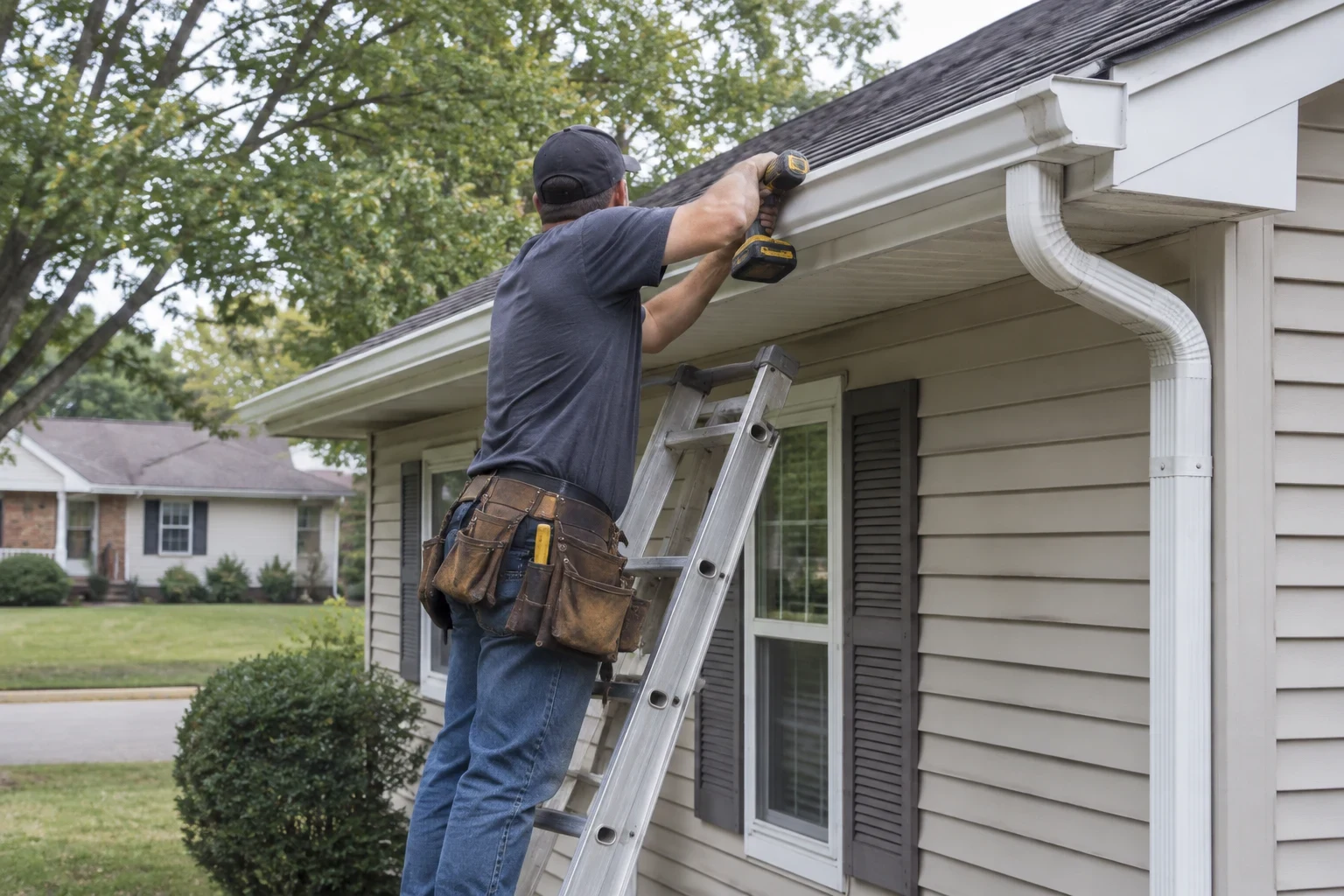
We hang one-piece aluminum gutters formed on site, with downspouts matched to the roof area feeding them. Each run is screwed to solid fascia behind hidden hangers and tucked under the drip edge, so rain leaves the roof, stays out of the wood and lands away from your foundation.
What a working gutter system does for your home
A gutter is the last part of the roof's drainage path. Water runs down the shingles, over the drip edge and into the trough, then drops through the downspout and away from the house. If any link in that chain is off, water ends up behind the gutter, in the fascia board, or pooling against the basement wall.
Most gutter problems we see are not the aluminum wearing out. They come from spikes backing out of rotted fascia, sections hung dead level so water sits, seams that opened after years of expansion, and 2x3 downspouts that cannot keep up with a large roof plane. Central Indiana winters add ice weight and freeze-thaw cycles, which loosen fasteners that were marginal to begin with.
One person from our office handles your gutter job from the first look to the final walk-around, so you know who to ask when a question comes up. If the inspection shows the problem is really at the roof edge, we say so and point you to roof repair instead of selling you new gutters.
What goes into our gutter installs
- One-piece aluminum runs
- Gutter is rolled from coil at your home and cut to the exact length of each eave. Joints only occur at corners and end caps, so there are far fewer sealed seams to dry out and leak.
- Sizing to the roof
- Before picking a profile, we work out how much roof surface, and at what slope, feeds every run. That tells us whether a 5-inch K-style gutter is enough or a big, steep plane calls for 6-inch gutter and 3x4 downspouts.
- Hidden hangers and correct pitch
- We set hangers about every two feet and drive screws into solid framing instead of spikes. Every run falls toward its outlet at roughly a quarter inch per ten feet, which keeps water from sitting in the trough.
- Drip edge and fascia check
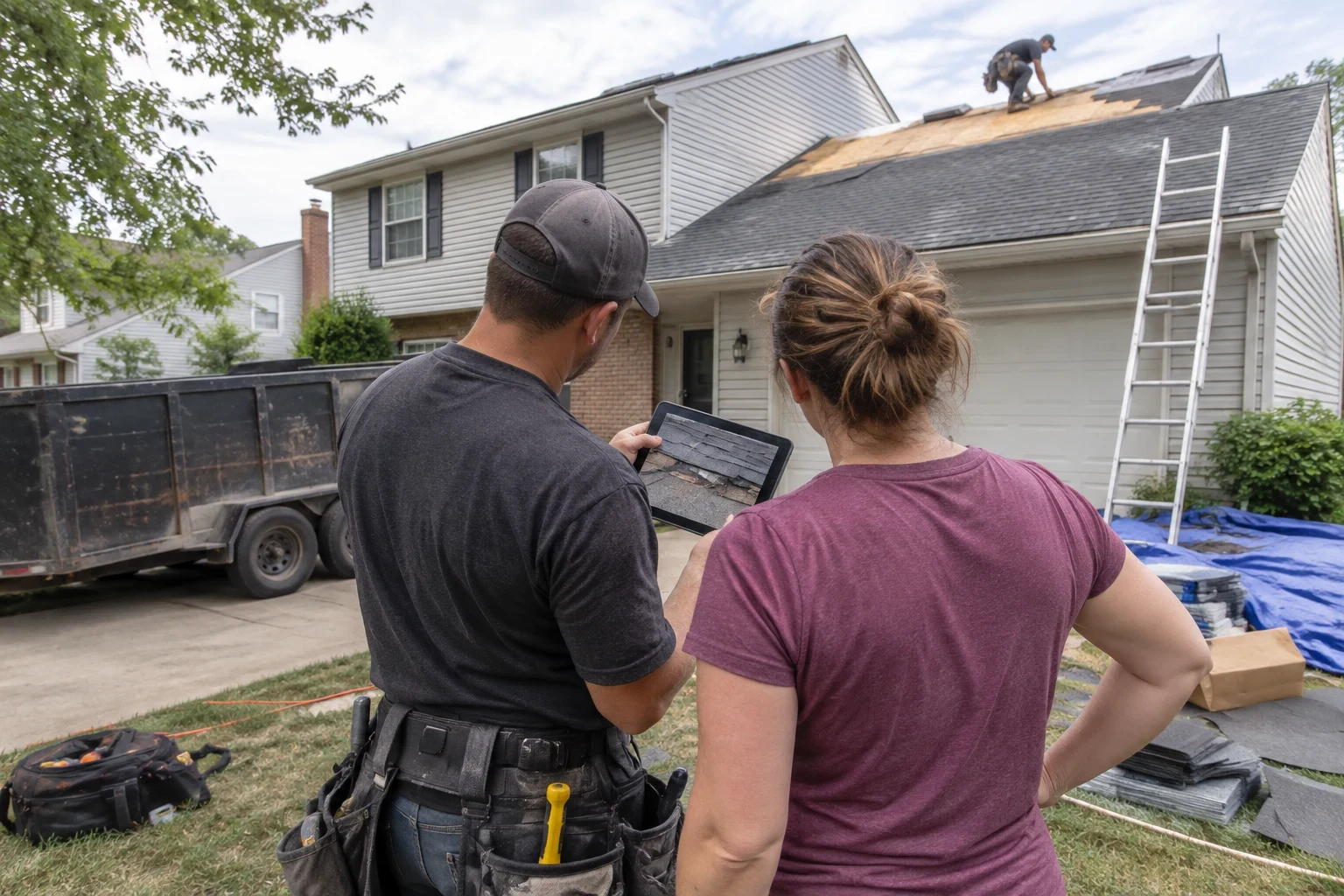
- We make sure the drip edge or gutter apron sends water into the trough rather than down behind it. If fascia is soft or rotted, we photograph it, show you, and replace it before the new gutter is hung.
- Downspouts and discharge
- Downspouts go where the most water collects, with extensions or splash blocks that carry runoff away from the foundation. We also watch that the outflow does not scour planting beds or spread across a walk that ices over.
Signs your gutters are failing
Water spilling over the front
If water sheets over the front lip in an ordinary rain, the cause is usually a clog, an undersized downspout or a run that has lost its slope. Check it during the next steady storm.
Sagging or pulling away
Dips between hangers, or a gutter tilting outward from the eave, point to loose fasteners or soft wood behind them. Each winter of ice and wet leaves pulls it further out of line.
Stains and peeling paint on fascia
Dark streaks or flaking paint on the fascia and soffit show water is running behind the gutter. Left alone, that moisture rots the board the gutter is fastened to.
Dripping seams and corners
Sectional gutters start leaking at their joints once the sealant dries out and cracks. Mitered corners are another frequent drip point.
Wet basement or washed-out beds
Eroded soil below the eaves or a damp basement wall often comes from short downspouts or gutters emptying right at the foundation.
What moves the price of new gutters
A gutter estimate comes down to how much material goes on the house and how much repair the wood behind it needs. We list each piece separately on a written estimate, so you can see where every part of the total comes from. Financing is available if you would rather spread the cost out.
Footage and roof height
We start with the total length of gutter and downspout your home needs. Eaves on a second story or above a steep pitch require longer ladder setups and fall protection, which adds labor compared with a single-story run.
Profile size
Stepping up from 5-inch gutter and 2x3 downspouts to 6-inch gutter and 3x4 downspouts uses noticeably more aluminum per foot. On a broad or steep roof plane, that larger profile is often what it takes to keep water inside the trough.
Fascia and drip edge
Hangers cannot grip rotted fascia, so soft boards have to be replaced before anything goes up. Because we probe the wood during the inspection, that repair shows up on your estimate rather than on install day.
Corners and layout
Each miter, extra outlet and added downspout takes more cutting and sealing. A roofline with many short, broken sections runs higher per foot than a house with a few long, straight eaves.
How we handle a gutter job
- 1
Inspection and measurements
We check the gutters, fascia, drip edge and the shingles just above them, then measure every run. Afterward you receive an estimate broken out item by item, along with pictures of each problem.
- 2
Removal and prep
The old gutters and downspouts are taken down and loaded into our trailer. Any damaged fascia is replaced, and the drip edge is adjusted wherever water had been slipping behind it.
- 3
Forming and hanging
We roll new gutter from coil on site, cut a piece for each eave and fasten it with screwed hidden hangers at the proper slope. Corners, end caps and outlets are sealed before we move on.
- 4
Water test and cleanup
A hose is run through every section to confirm water reaches the outlet without pooling or dripping. Then we pick up scrap and stray fasteners from the yard and go over the finished work with you.
Common gutter questions
Should I repair my existing gutters or replace them?
If your gutters are one-piece runs of the right size and only need a few hangers reset or a corner resealed, repair is the sensible choice. Sectional gutters dripping at many seams, undersized troughs, or spikes pulling out of soft fascia usually mean replacement is cheaper over time. When both paths are reasonable, we show you the photos and price them side by side.
Why does my gutter overflow even when it is clean?
A clean gutter that still spills usually has a downspout too small for the roof area draining into it, or a run too long to empty through one outlet. A trough hung flat, or sloped away from its outlet, will also overflow at its low point. Upsizing the downspout or adding a second outlet generally fixes it.
Will new gutters change anything on my roof?
The two have to fit together. The back of the gutter should tuck under the drip edge or gutter apron so water falls into the trough instead of behind it. If we notice damaged shingles or flashing at the eave during the gutter visit, we tell you before any work starts.
Can gutters go on during a roof replacement?
Yes, and it is often the best time. The drip edge is new during a roof replacement, so the gutters can be hung to match it, and you have one crew on site and one cleanup at the end.
How many days will my gutter installation take?
Most homes are finished in a single day after any fascia repair is done. Bigger houses, or jobs with a lot of rotted wood to replace, may run into a second day. You will know which to expect before we begin.
Have your gutters and roof edge checked
Our inspection covers the gutters, the fascia they hang from and the shingles at the eave, and we walk you through the photos afterward. One person from our office is your contact from that first call until the yard is cleaned up.