ServicesRoof Inspections
Roof Inspections in Carmel, IN
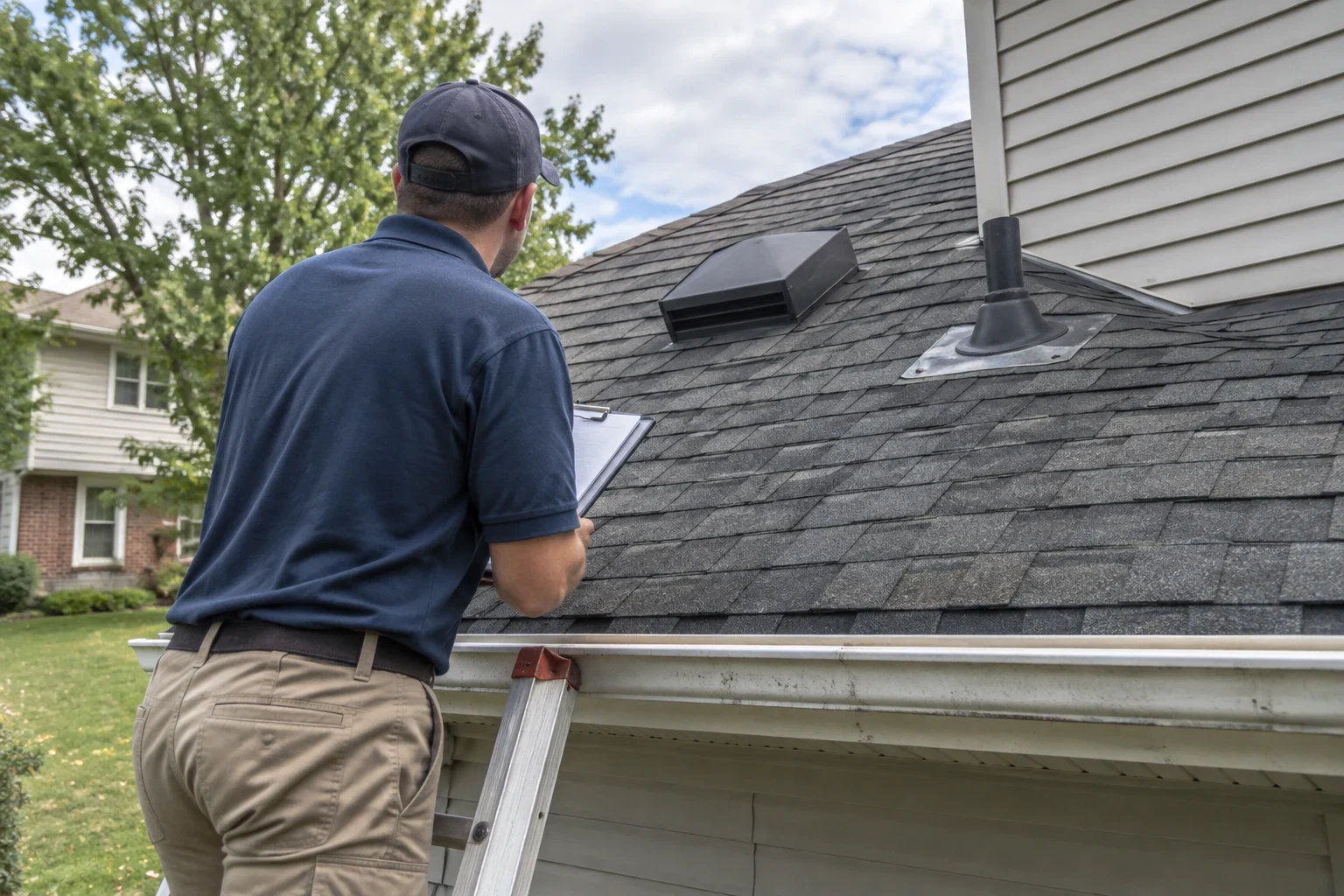
We get up on your roof, inspect the shingles, flashing and each pipe and vent penetration, then move into the attic to see the sheathing from below. Every issue gets photographed. The person who did the inspection reviews those photos with you and says plainly whether you need nothing, a repair or a new roof.
What a roof inspection tells you
Leaks rarely start where you can see them. A shingle tab that has come unsealed, a split rubber collar on a plumbing vent or an opening where step flashing meets a sidewall lets water through well before a ceiling stain appears. By the time it does, the sheathing or attic insulation may already be soaked.
Schedule an inspection after hail or strong wind, ahead of buying or selling a home, once an asphalt roof is around 15 years old, or any time you want an honest read on its condition. Repeated freezing and thawing over an Indiana winter pries small gaps wider, so a check in spring finds what the cold opened up.
One person handles your inspection from start to finish. The same contact books the visit, inspects the roof and fields your questions later, so no detail gets dropped between an office, a salesperson and a crew.
The parts of your roof we examine
- Asphalt and granule wear
- Tabs that are missing, lifted or creased get noted, along with bald patches where the mineral granules have shed and hail strikes that feel soft when pressed. Once the granules are gone, sunlight degrades the exposed asphalt fast.
- Flashing and pipe boots
- This covers step flashing where the roof meets a wall, chimney counterflashing, valley metal and the rubber boots around plumbing stacks. Years of sun harden those boots until they crack, and cracked boots cause a large share of shingle roof leaks.
- Attic ventilation and decking
- From inside the attic, we weigh intake vents against exhaust, look for daylight through the boards, and record water-stained or damp decking, frost marks and rusted nail tips. Poor airflow overheats shingles in summer and feeds ice buildup along the eaves in winter.
- Eaves, fascia and gutters
- Clogged gutters or ones sagging off the fascia push water back under the starter course. The drip edge, the fascia behind it and the direction your downspouts empty all get a look, since water dumped at the foundation causes its own trouble.
- Low-slope and metal areas
- On homes with a flat porch roof or metal panels, TPO seams and ponding spots get checked, along with panel fasteners and their rubber washers. Metal expands and contracts with the temperature, and that movement loosens screws over time.
- Dated photos of every issue
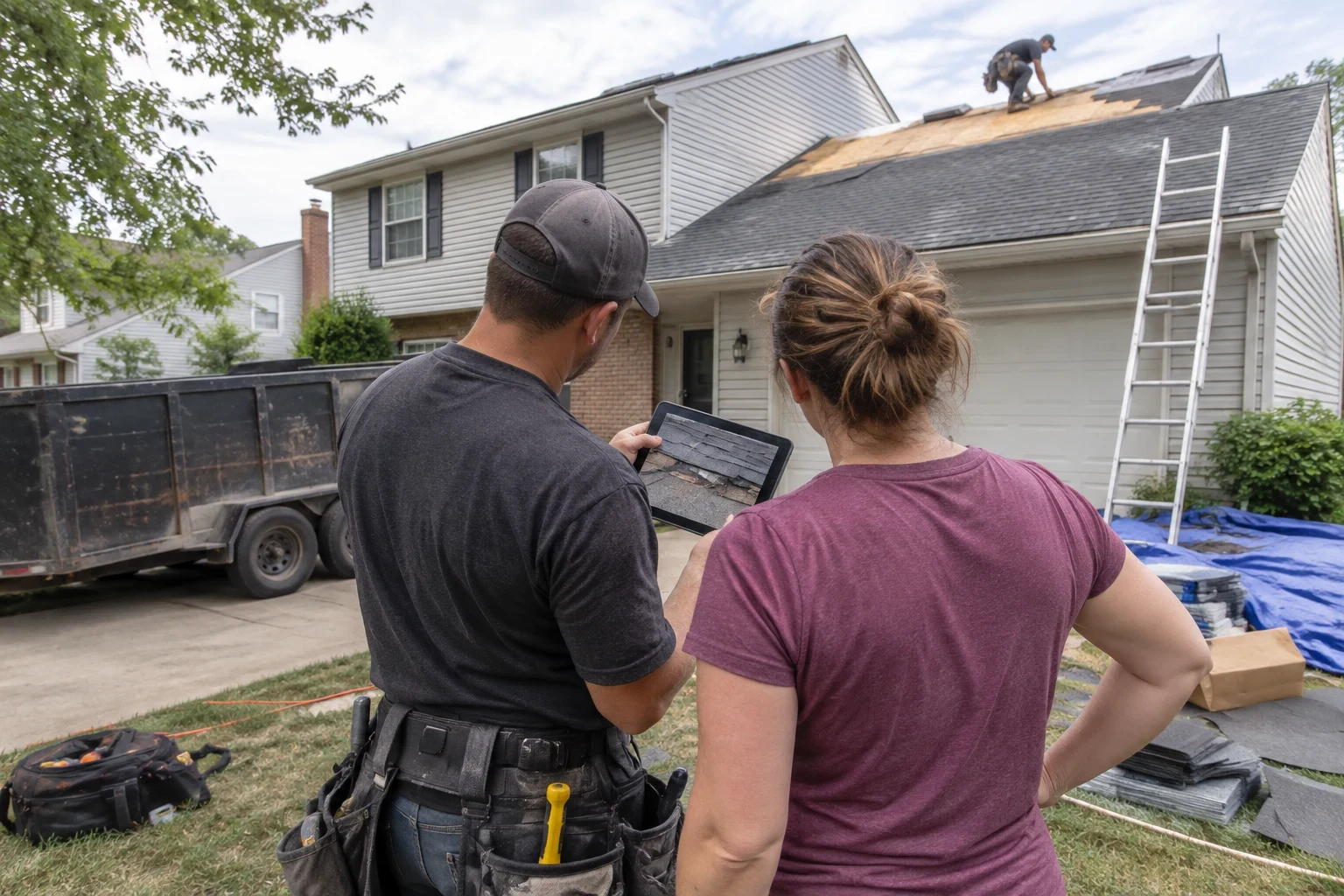
- Anything we find is photographed, dated and tied to its spot on the roof. You get those photos and a brief written summary, and we review them with you in person.
Clues your roof needs a closer look
Hail or high wind just passed through
Dented shingles and creased tabs are hard to spot from the ground. Getting the roof looked at soon after the storm keeps you inside the deadline your insurance policy gives for reporting damage.
Piles of granules below the downspouts
A new roof sheds a little grit at first. Heavy buildup at the downspout outlets tells us the shingles are wearing through to the fiberglass mat.
Water marks or a musty upstairs
Brownish rings on the ceiling, bubbling paint near an outside wall or a stale smell on the top floor usually point to water slipping past shingles or flashing.
Thick ice dams along the edge
Warm air leaking into the attic heats the upper roof deck and melts the snow, which refreezes when it hits the colder overhang. Meltwater backed up behind that ice can push under shingles and down into the wall cavity.
Curled or cupped shingles
Edges turning up or centers sinking down typically trace back to heat trapped in the attic or simple age. Either way, those shingles no longer sit flat and are easier for strong wind to lift.
Inspection cost and what drives repair pricing
The inspection is free, and nothing we find commits you to hiring us. If the roof does need work, the price depends on the specific defect and on what shape the decking and underlayment are in below it. For a bigger repair or a full replacement, financing is an option.
Damage below the shingles
Replacing a cracked pipe boot is a short job with few parts. If water has already reached the plywood or OSB deck and softened it, those sections have to be cut out and new boards fastened in, which adds lumber and labor time.
Slope and eave height
Steep pitches and tall two-story edges call for roof jacks, harness anchor points and careful footing. Work on those planes moves more slowly, and the labor reflects that.
Availability of matching shingles
Shingle makers discontinue colors and profiles every few years. When a close match is gone, a small patch shows, so a larger section may need new shingles to blend in.
Your insurance policy
If storm damage is covered, your deductible and the policy terms decide what you pay out of pocket. We coordinate with you and with your insurer through the claim, while the adjuster makes the call on what the policy covers.
How the inspection visit runs
- 1
A quick phone call
Tell us what you have noticed and we agree on a time. Whoever takes your call is the person who shows up and remains your contact after the visit.
- 2
From the ground up to the roof
First we look over the gutters, eaves and fascia from the yard, then climb up when the pitch and conditions allow safe footing. If the roof is steep or wet, we inspect it with a pole-mounted camera and binoculars rather than walking on it.
- 3
Inside the attic
If you are comfortable with it, we head up through the attic hatch to examine the deck from below, along with the insulation and vent openings. Slow leaks and airflow problems tend to leave their first marks here.
- 4
Your results, explained
We walk through the photos together and give you a clear verdict: leave it alone, schedule a targeted roof repair, or plan a roof replacement. If you ask for an estimate, every item is listed separately so you can see where the money goes.
Common questions about roof inspections
Does the inspection cost anything?
No. The roof walk, the attic check and the photo review are all at no charge. You are free to take the findings and do nothing. When the roof is sound, that is exactly what we tell you.
Does someone have to be home?
The outside of the roof can be checked while you are away, but the attic needs someone to open the house for us. Many homeowners stay so they can look at the photos and ask questions while the details are fresh.
How often should a roof get inspected?
For most asphalt roofs, every one to two years, and again after any hail or strong wind. Roofs that are older or have leaked before deserve a yearly look, since resealing a flashing seam early costs far less than replacing the rotted sheathing it would eventually cause.
Do you inspect roofs in winter?
We do, within limits. Cold weather does not stop us from checking the attic, the gutters and most of the surface from a ladder or the ground. We stay off roofs that are snow-covered or icy, and we return for the walk once the surface is safe.
Can an inspection support an insurance claim?
Our dated photos and written notes show what was damaged and where it is on the roof, which gives you solid documentation when you open a claim. We can explain how the claim steps usually go and be on the roof when the adjuster visits. The Storm Damage Repair page explains what comes after approval.
Find out what shape your roof is in
One call sets up the visit, and the person who inspects your roof is the one who explains what they found. We serve Carmel along with Westfield, Fishers and the surrounding area.