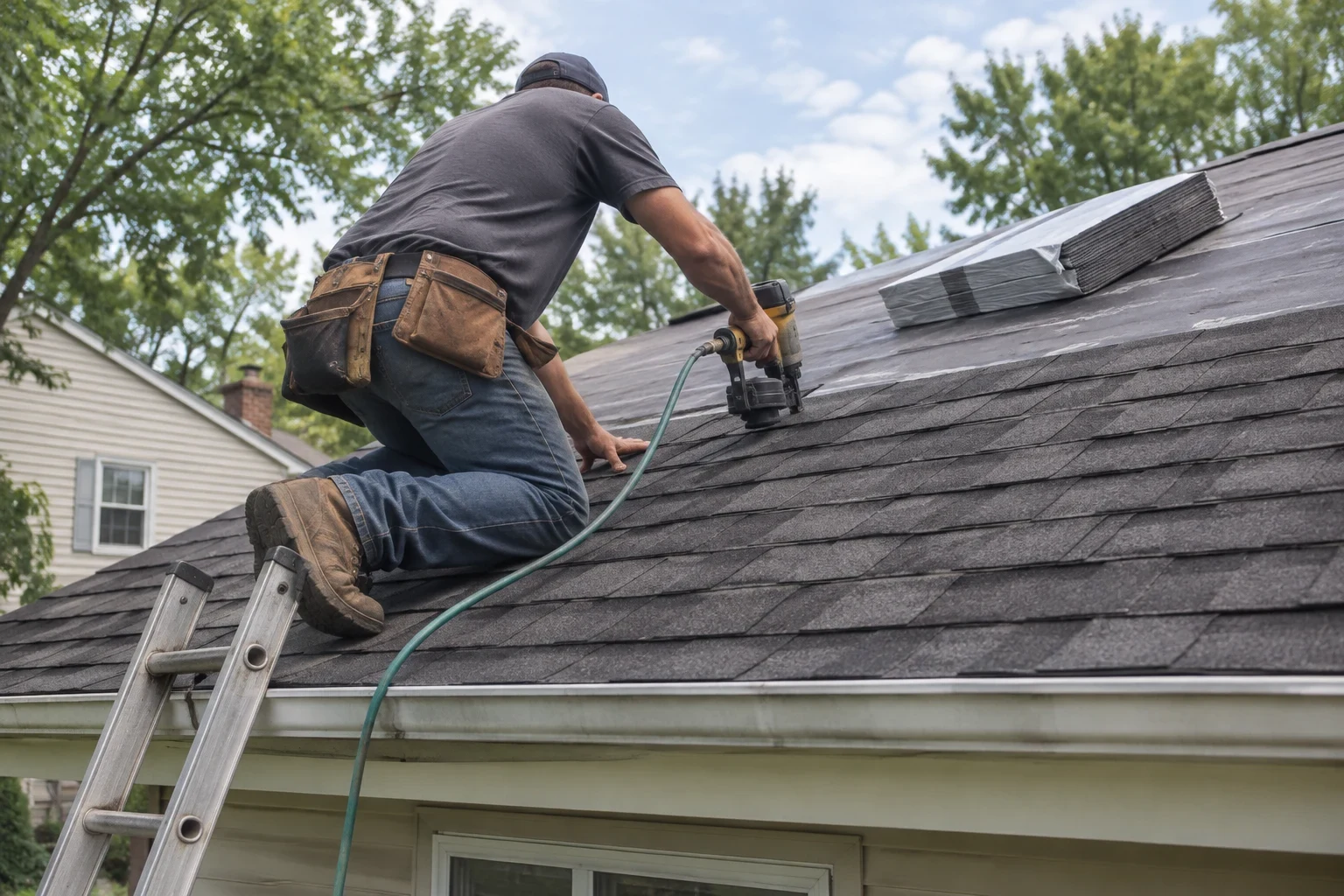
ServicesShingle Roofing
Shingle Roofing in Carmel
We install asphalt shingle roofs as a complete system: decking, ice and water barrier, synthetic underlayment, flashing, ventilation and the shingles themselves. One person handles your questions, the schedule and the final walk-through, so you always know who to ask.
When a new shingle roof makes sense
Asphalt shingles are the most common roof covering on houses for sound reasons. On slopes of 4/12 or steeper they shed water reliably, they tolerate repeated freezing and thawing when laid over proper underlayment, and on most rooflines they cost less than metal. Architectural, or laminated, shingles bond two layers of fiberglass mat and asphalt together, which earns them higher wind ratings and more visual depth than the older three-tab style.
The shingles are only the top layer. When a fairly new shingle roof fails early, the cause is almost always beneath it: eaves without an ice barrier, old step flashing put back on, nails set above the nail line, or soffit vents smothered by attic insulation. We plan for each of those before the crew ever arrives.
Shingles depend on slope to drain. On a low-slope or nearly flat section, water lingers long enough to creep under the laps, so we will steer you toward a membrane instead of selling you shingles that will not last there. Our TPO Roofing page describes that system, and Metal Roofing covers when steel panels are the stronger fit.
Every layer of a shingle roof we install
- Full strip to the sheathing
- Every old layer comes off, down to the plywood or plank deck. With the deck bare we can find delaminated or spongy sheets and swap them out rather than burying them under new material.
- Self-adhering eave and valley membrane
- Ice and water barrier goes along the bottom edge of the roof, down each valley, and around penetrations like plumbing stacks and exhaust vents. In winter, ice dams push meltwater back up under the lowest courses, and this rubberized sheet seals itself around every nail shank so the water stops before it reaches the soffit or the ceiling below.
- Synthetic underlayment and drip edge
- The rest of the deck gets synthetic underlayment, which holds up to foot traffic and lies flat when wet instead of buckling like felt. Fresh metal drip edge at the edges sends runoff into the gutters and keeps it off the fascia.
- All-new flashing
- Step flashing, pipe boots and counterflashing are replaced, never reused once bent or corroded. Leaks most often begin at these joints, so they get new metal lapped in the right order.
- Intake and exhaust balanced
- We compare soffit intake with ridge exhaust and fix any mismatch with ridge vent or more intake. Without that airflow, summer heat bakes the shingles from underneath and winter moisture frosts the attic sheathing.
- Shingle options explained
- We install standard architectural shingles as well as Class 4 impact-rated lines. You get the actual differences in wind rating, granule weight and hail performance so the choice rests on facts.
How to tell your shingles are wearing out
Heavy granule loss
New shingles drop a few loose granules in the first months. Years later, thick drifts in the gutters or at the downspout outlets mean bare asphalt is facing the sun and breaking down quickly.
Edges curling or tabs cupping
When shingle edges lift or the middle of a tab dishes inward, the asphalt has gone stiff. Wind gets under those edges and can peel off entire rows.
Missing or creased shingles
A shingle that wind has flipped up usually keeps a crease line after it settles back. That means its seal strip has let go, and it is likely to blow off in the next storm.
Water marks inside or in the attic
Stains on a ceiling, or dark rings around nail tips on the underside of the deck, signal either a leak or condensation. Both call for a look at the whole roof, not a single patch.
The same leak, again and again
If you need roof repair season after season, the shingles have usually reached the end of their life. A new roof then tends to cost less over the years than repeated patching.
What drives the cost of a new shingle roof
Two houses with matching floor plans can land at very different roof prices. The number depends on how much material your roof takes, how difficult it is to work on safely, and what condition the decking is in once the old shingles come off. Each of these appears as its own line on your estimate, and financing is available if you would rather pay over time.
Squares and pitch
Roofs are measured in squares, and one square equals 100 square feet. A steep pitch calls for more fall protection and slower footwork, so labor goes up with the angle.
How cut up the roof is
Every valley, dormer, hip and skylight means trimmed shingles and more flashing work. A plain gable roof goes on much faster than one with many planes meeting at odd angles.
Hidden sheathing damage
Soft or rotted plywood has to come out before new shingles go down. Because that damage only shows once the old roof is stripped, we quote a price for each replaced sheet rather than guessing at a total.
Product line and old layers
Class 4 impact-rated shingles carry a higher material cost than standard architectural lines. If your house has two old layers instead of one, tear-off takes longer and the disposal load is heavier.
How we run a shingle roof job
- 1
Free inspection, itemized estimate
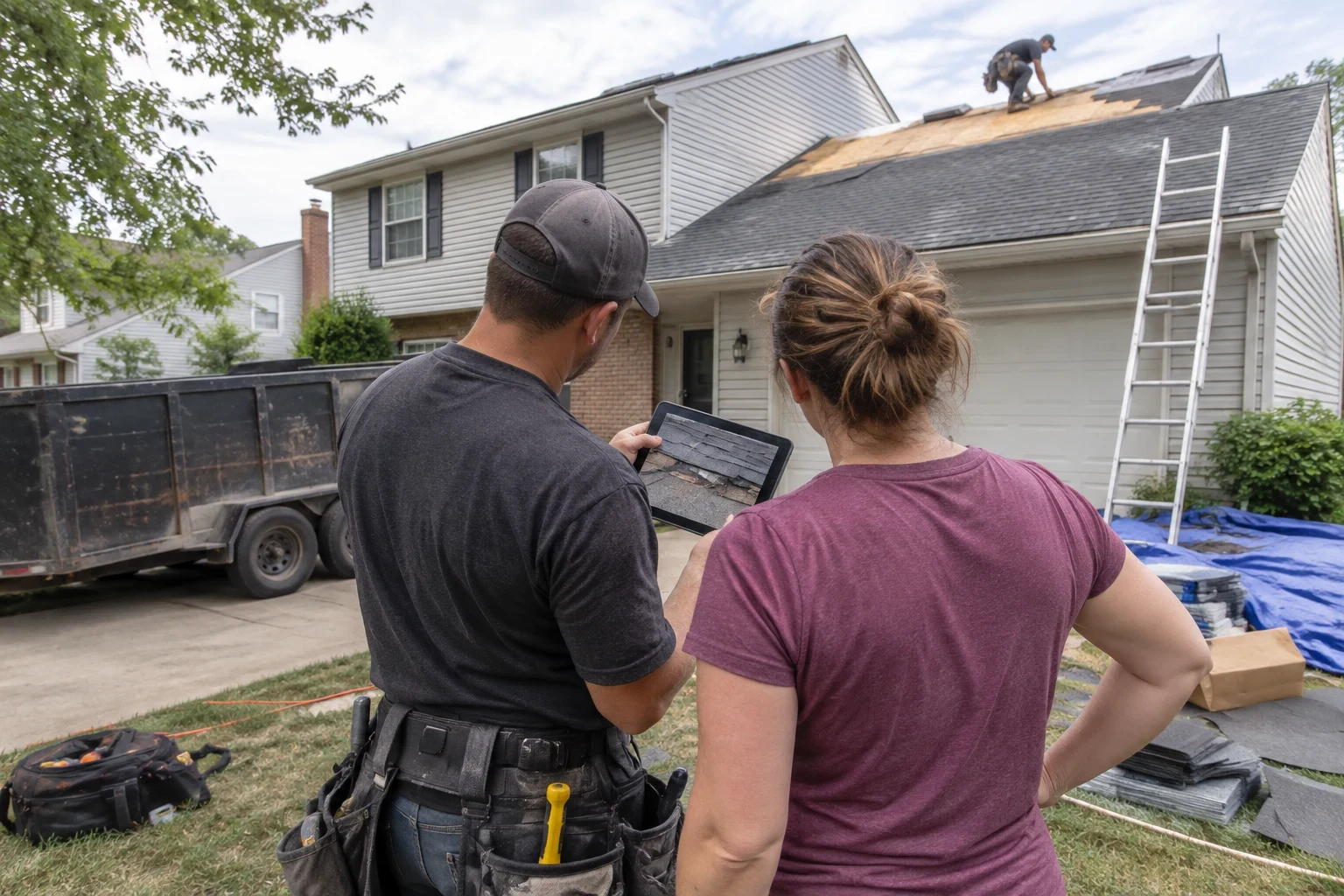
We walk the roof, check the attic, photograph what we find and measure each plane. Your estimate lists shingles, underlayment, flashing and vents separately, plus a set price for any decking that turns out to need replacing.
- 2
One person sets it all up
Whoever inspected your roof also picks the install date, orders the materials and takes your calls. We pull any permit the city requires and tell you ahead of time when the delivery truck is coming.
- 3
Protect the property, then strip
Tarps go over plantings, plywood goes against AC units and nearby windows, and we set the debris container on boards or a spot that keeps its weight off your concrete. The crew tears off one section at a time so no part of the deck sits exposed for long.
- 4
Building the new roof
The crew works from the deck up: sheathing repairs first, then the eave membrane and synthetic underlayment, then new flashing, the field shingles, and the ridge vent last. Each shingle is fastened within the manufacturer's nailing zone with four or six nails, depending on the wind rating required.
- 5
Final sweep and walk-through
Magnetic sweepers pass over the lawn and driveway to collect stray nails, and we clear roofing debris from the gutters. Then we walk the finished roof with you, and the same contact remains your call for any question afterward.
Common questions about shingle roofs
Can new shingles go right over the old layer?
Many codes permit one overlay, but we advise against it. Laying over the old roof hides soft decking and worn flashing, adds load to the framing, and holds extra heat that ages the new shingles faster. Stripping to the deck is the only way to repair what sits underneath.
Is it worth paying more for impact-rated shingles?
Class 4 shingles pass a test where steel balls are dropped on them from set heights to mimic hail without cracking the mat. Central Indiana sees enough spring hail that a lot of owners choose them, and some insurers give a premium discount for them. Check with your agent before you pick a line.
How many days will my roof take?
A typical single-family roof is stripped and reshingled in one to two days. A complicated roofline, a lot of sheathing replacement or a rainy forecast can stretch that, and your contact will call you if the schedule shifts.
Should I plan to be home while the crew works?
You do not need to be. Please move cars out of the garage and off the driveway before the crew starts. It will be loud, and pets are safer kept away from the parts of the yard where old material drops.
Hail or wind hit my roof. Could insurance cover new shingles?
Often it does. On storm claims we coordinate with you and with your insurance company, so the paperwork does not land on you alone. Your contact photographs the damage and records roof measurements, giving the adjuster clear evidence to review, and our Storm Damage Repair page walks through each stage of a claim.
Get a clear read on your shingle roof
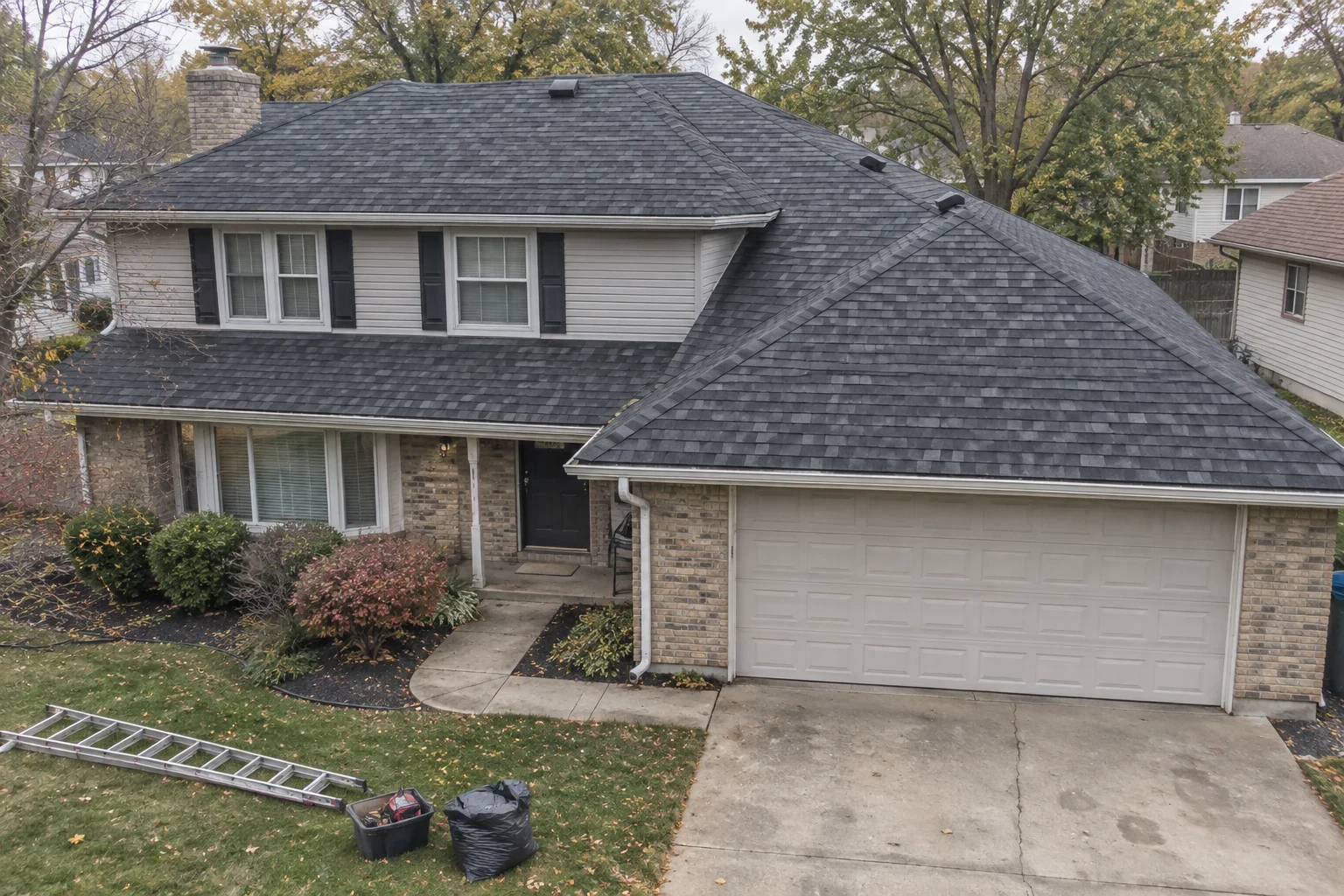
We climb the roof, check the attic and walk you through the photos so you can see what we saw. From there you get an honest call on whether a fix will hold or the roof is due, and the same person handles your job until the last nail is swept up.